



Multiplier is a capable Employer of Record. But "capable" and "the right fit for your team" are not the same thing, and plenty of companies figure that out a few payroll cycles in. Maybe the pricing got murkier than expected, or support went quiet when you needed it most.
If you are weighing Multiplier alternatives in 2026, this guide ranks seven of the strongest options, shows how they stack up in a side-by-side table, and walks you through switching without dropping a single paycheck. No vendor spin, just what each one is genuinely good at and where it falls short.
Key Takeaways
- Multiplier is a solid EOR, but teams leave it over pricing clarity, payroll speed, support, and coverage fit.
- The strongest alternatives include Borderless AI, Deel, Remote, Oyster HR, Papaya Global, RemoFirst, and Rippling.
- Borderless AI stands out as the only AI-native EOR with 3–5 day payroll, zero salary deposits, and 100% owned entities across 170+ countries.
- The right choice depends on your hiring model, target regions, team size, and how much automation and support you need.
- Switching EORs is low-risk when you plan the payroll cutover and contract transfer in advance.
Why Look for a Multiplier Alternative?
Let's be fair to Multiplier first. It handles EOR employment, contractor payments, and benefits across roughly 150+ countries, and it does the core job most global-hiring teams need. If it is working for you, that is a good sign.
But teams still leave, and usually for concrete reasons. Pricing clarity is the big one: a starting rate that reads clean until deposits and fees surface in the fine print. Payroll timelines are another, especially when a cutover slips and someone's salary lands late. Support responsiveness matters more than any feature list once you are live in a dozen countries.
Coverage fit is the quiet dealbreaker. An impressive country count means little if the actual employment work is outsourced to a third-party partner. When something breaks in-country, you want the provider to fix it, not forward your ticket to a vendor you never chose.
Then there is the appetite for automation. More teams now want AI-native tooling that removes manual busywork, not "AI" that is really just a search bar bolted onto legacy software. Generating a compliant contract in minutes is a different experience than waiting days for a template.
None of this is unusual. Over 20% of Borderless AI customers previously used another EOR and switched because something better existed. Evaluating alternatives is normal, and doing it carefully is smart. The goal is not to leave a fine tool for a shinier one. It is to match the provider to how your team actually hires.
The Best Multiplier Alternatives at a Glance
Here is how the seven contenders compare before we get into the detail. Prices are starting rates as reported on each provider's own pages or public comparison tables, not official quotes, so treat them as directional.
The 7 Best Multiplier Alternatives in 2026
1. Borderless AI: Best for AI-Native, Fast, Deposit-Free Global Hiring
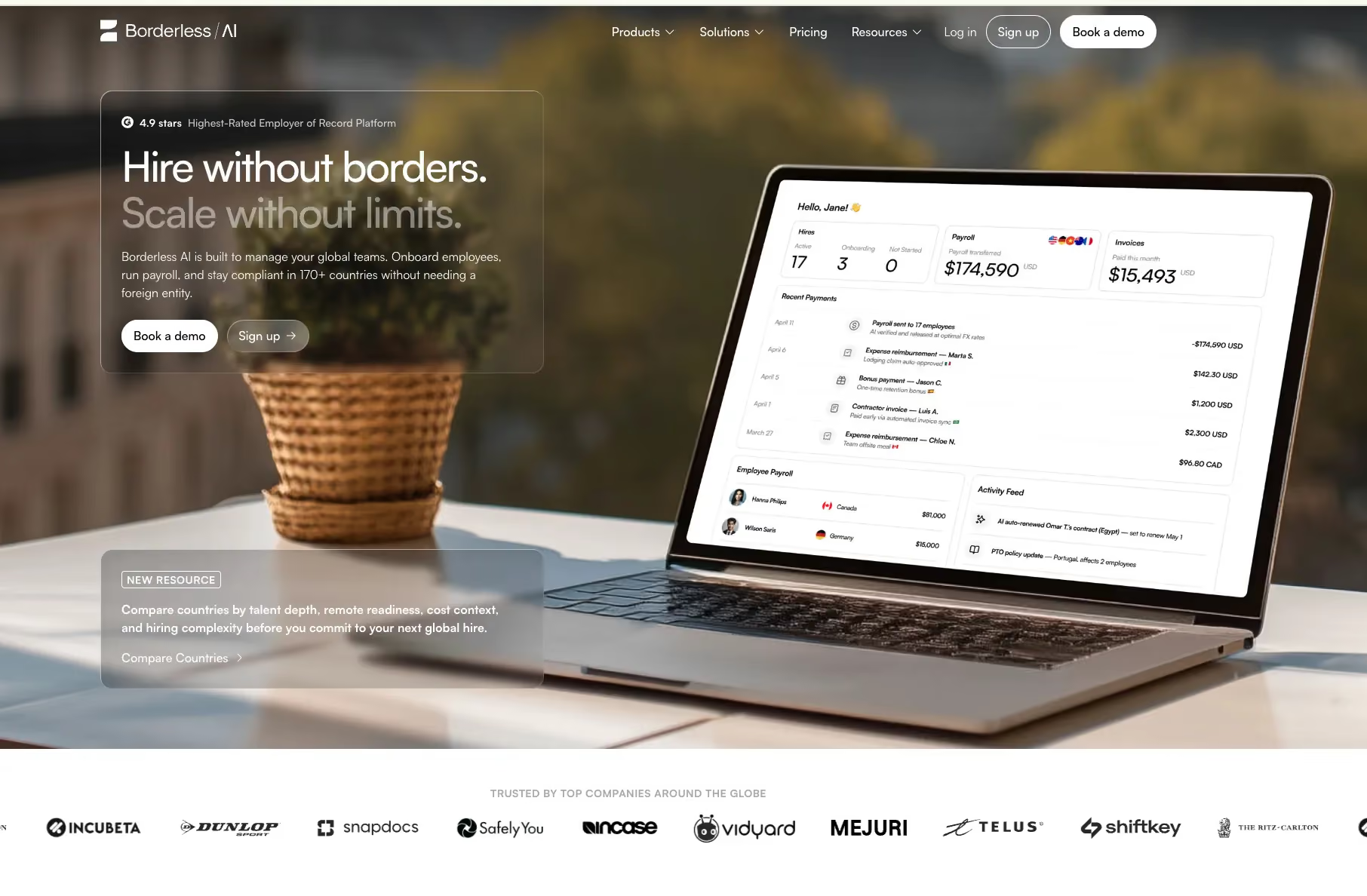
Borderless AI is the world's first AI-native EOR, and that shapes everything about how it works. AI agents like HRGPT and the AI Contract Generator handle onboarding, generate compliant local contracts in minutes, and surface real-time compliance alerts when labor laws shift.
The numbers are where it separates from the pack. Payroll runs in 3-5 days, the fastest in the industry, against a 20-30 day norm elsewhere. There are zero salary deposits, so you are not pre-funding wages weeks ahead. Entities are 100% owned across 170+ countries, with no third-party vendors doing the real work.
Support is 24/7, in-house, and North America–based, which shows up in a 4.9/5 G2 rating. It integrates with Workday and ADP Workforce Now, and covers 90+ currencies. For teams that want speed and automation without giving up compliance, it’s the clearest Multiplier alternative.
2. Deel: Best for Breadth of Integrations and Scale
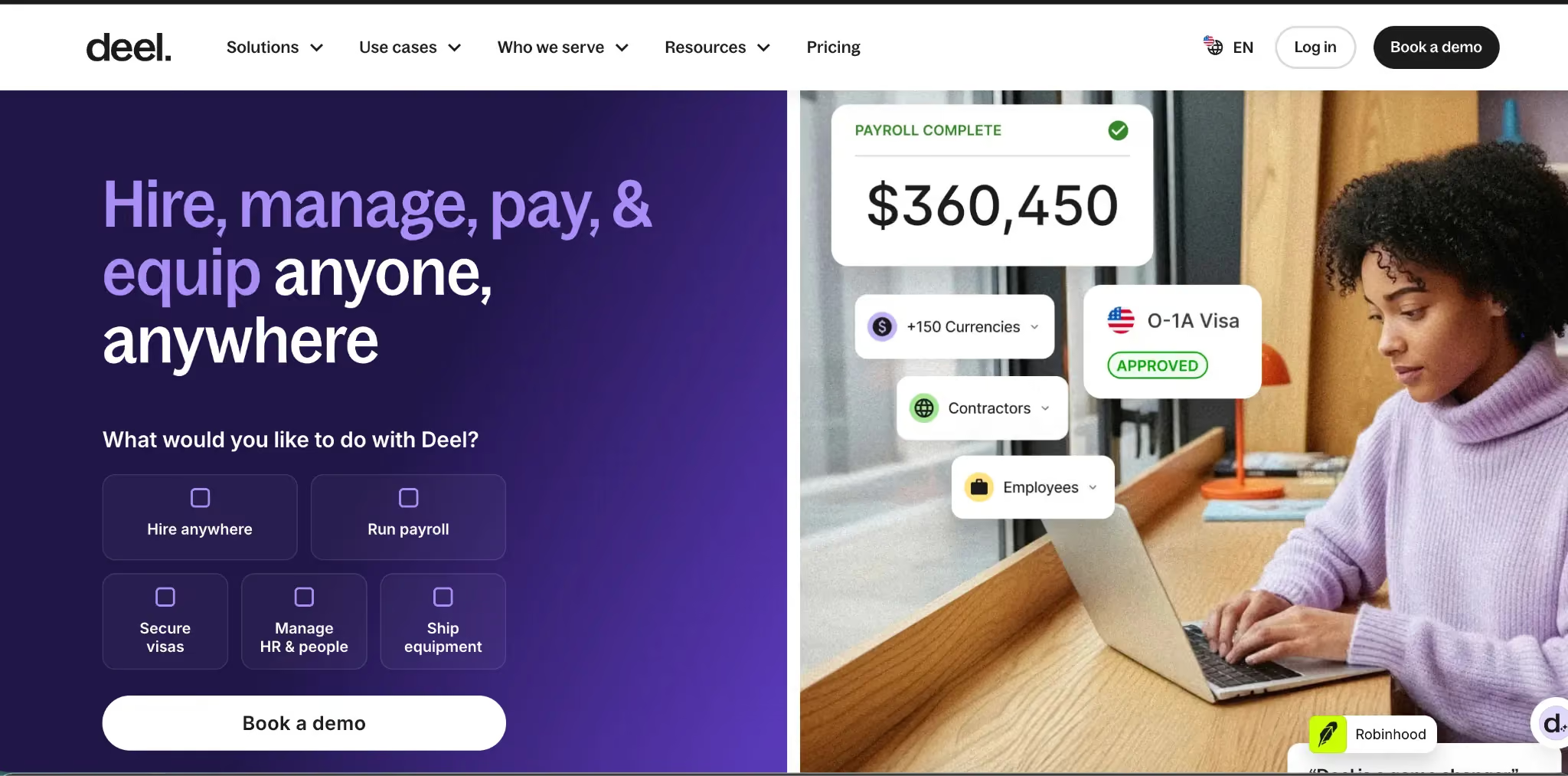
Deel is the household name, and for good reason. It covers 150+ countries, owns entities in many key markets, and offers one of the broadest HR and payroll ecosystems around, with a deep integration marketplace.
That breadth is the pitch and the caveat. Starting pricing sits around $599 per employee per month as reported, and the platform's many add-ons can nudge the real total higher than you first modeled. Contractor management, background checks, and equipment often carry their own line items.
If you want a large, mature ecosystem and can manage the upsell surface, Deel scales comfortably with big, distributed teams. Just build your budget from the fully loaded number, not the starting rate, and you will avoid surprises later.
3. Remote: Best for Owned-Entity Compliance Depth
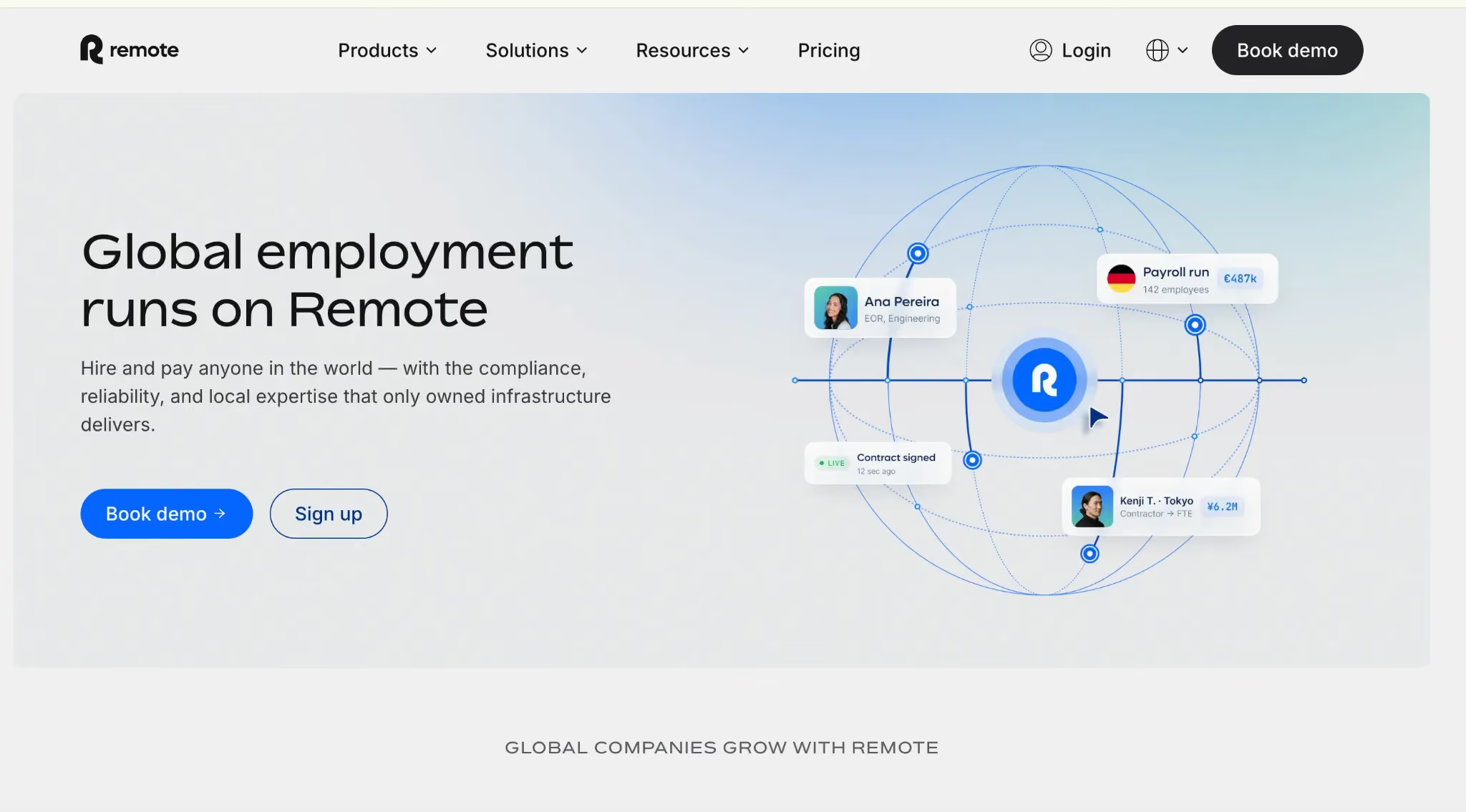
Remote built its reputation on compliance rigor. It operates owned in-country infrastructure across 170+ countries, with a strong posture on data protection and IP ownership that appeals to teams shipping sensitive work across borders.
Starting pricing runs around $599–699 per employee per month as reported, placing it at the higher end of this list. You are paying for depth rather than the lowest sticker, and for teams in regulated industries that premium often pays for itself.
For legal and security-conscious teams that treat compliance as non-negotiable, Remote is a credible, serious option. If your work involves sensitive IP or strict data rules, its infrastructure is built with exactly that in mind.
4. Oyster HR: Best for Distributed-First SMBs
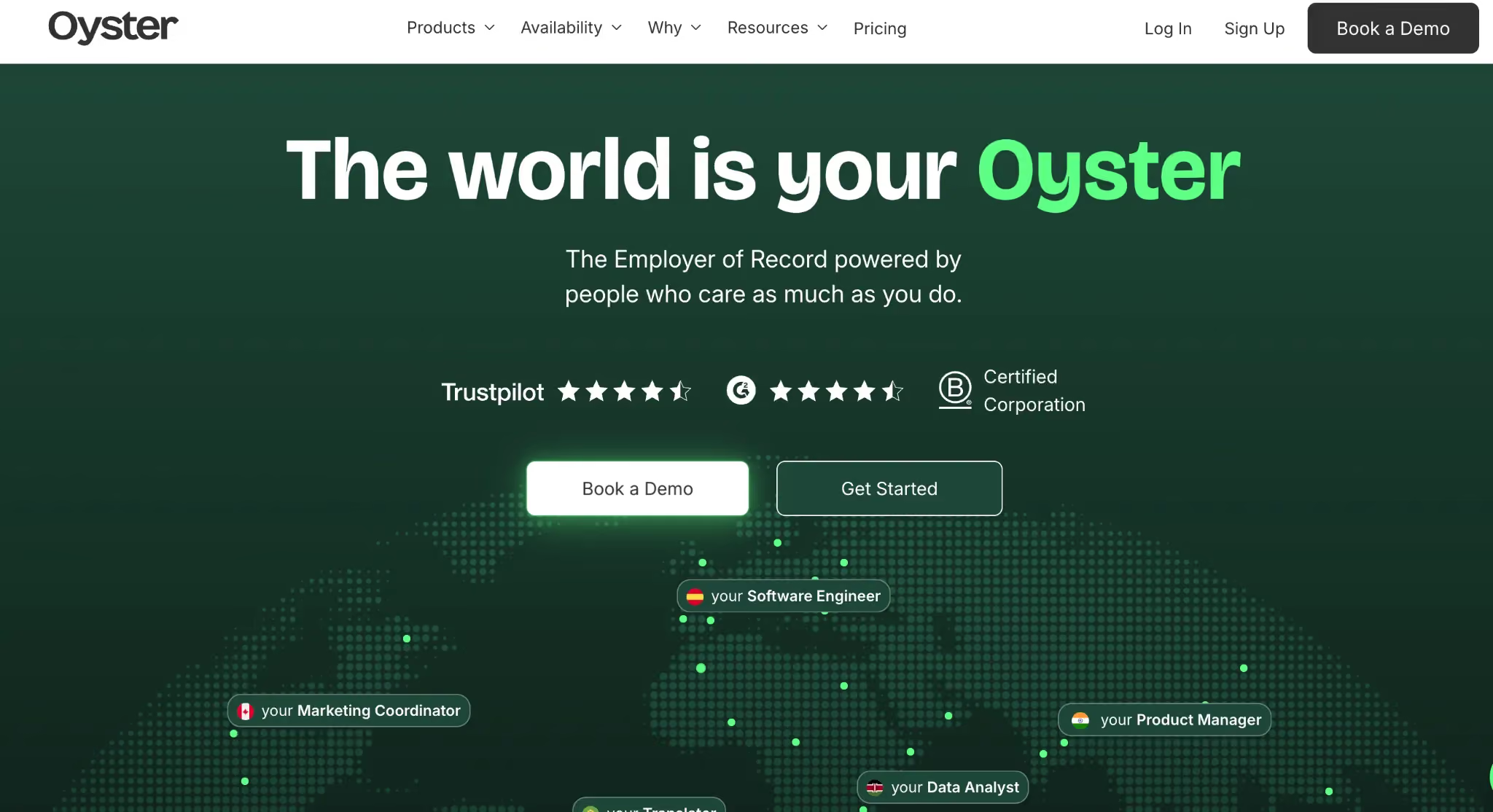
Oyster leans into the distributed-first crowd: smaller companies building remote teams who want a tool that is pleasant to actually use. The interface is clean, the tiering is comparatively transparent, and coverage reaches 180+ countries.
Reported starting pricing lands around $499–699 per employee per month depending on tier. Worth noting: in some regions coverage runs through partners rather than fully owned entities, so confirm the model in your target markets before you commit.
For SMBs prioritizing usability and clarity, Oyster is a comfortable fit. Teams without a dedicated HR ops function tend to appreciate how little hand-holding the platform demands to get running.
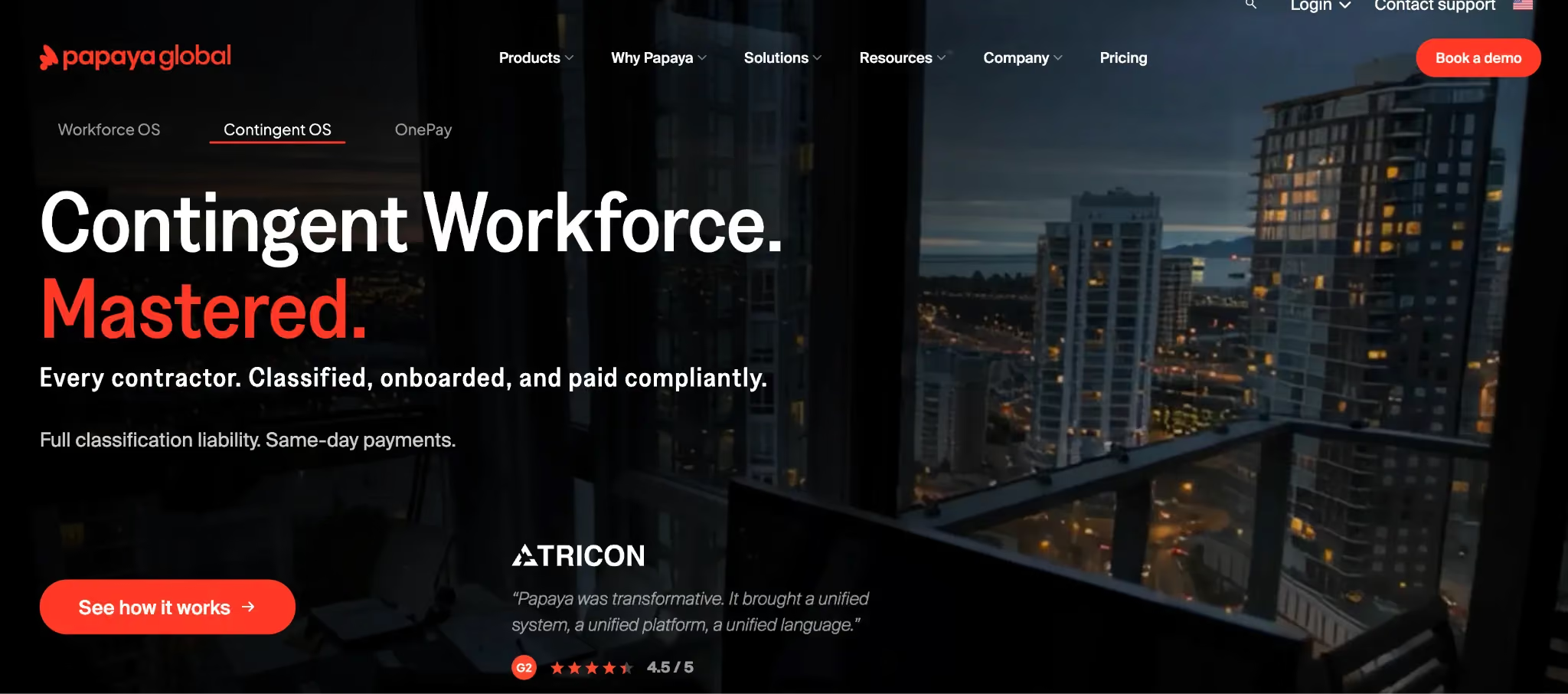
5. Papaya Global: Best for Payroll-Heavy, Enterprise Workflows
Papaya Global is payroll-first. If your pain is running complex, multi-currency payroll at enterprise scale with real analytics, this is where it shines, with reporting and workforce spend visibility built for finance teams.
Reported starting pricing sits around $599 per employee per month, and coverage spans 160+ countries. The platform's depth is aimed squarely at larger organizations, which can feel heavy for a company making its first few international hires.
For payroll-heavy enterprises, though, Papaya earns its place. If finance owns the global-workforce decision and wants granular spend visibility across currencies, few tools go deeper on the payroll side.
6. RemoFirst: Best for Budget-Conscious Coverage
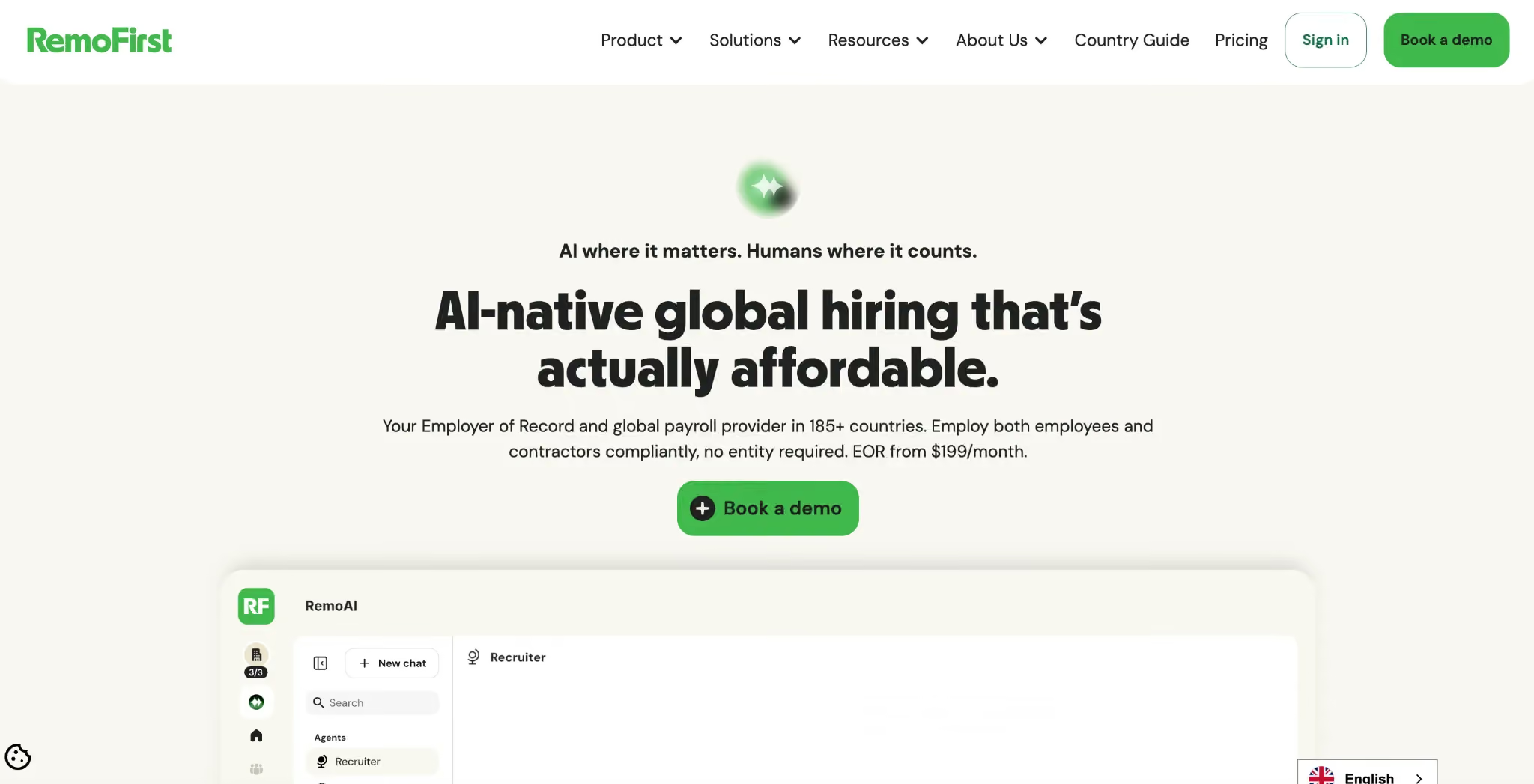
RemoFirst competes on price. Reported starting rates around $199 per employee per month make it one of the cheapest entries here, paired with a wide country list reaching 180+ markets.
The trade-off is what you would expect at that price. Much of the coverage relies on partners, and the platform and support depth are lighter than the premium options. Complex cases can take longer to resolve when there is a partner in the loop.
For budget-conscious teams hiring in straightforward markets, RemoFirst stretches the dollar. Just go in clear-eyed about the lighter touch, and confirm the support model matches how much help your team will actually need.
7. Rippling: Best for Combined HR + IT + Payroll
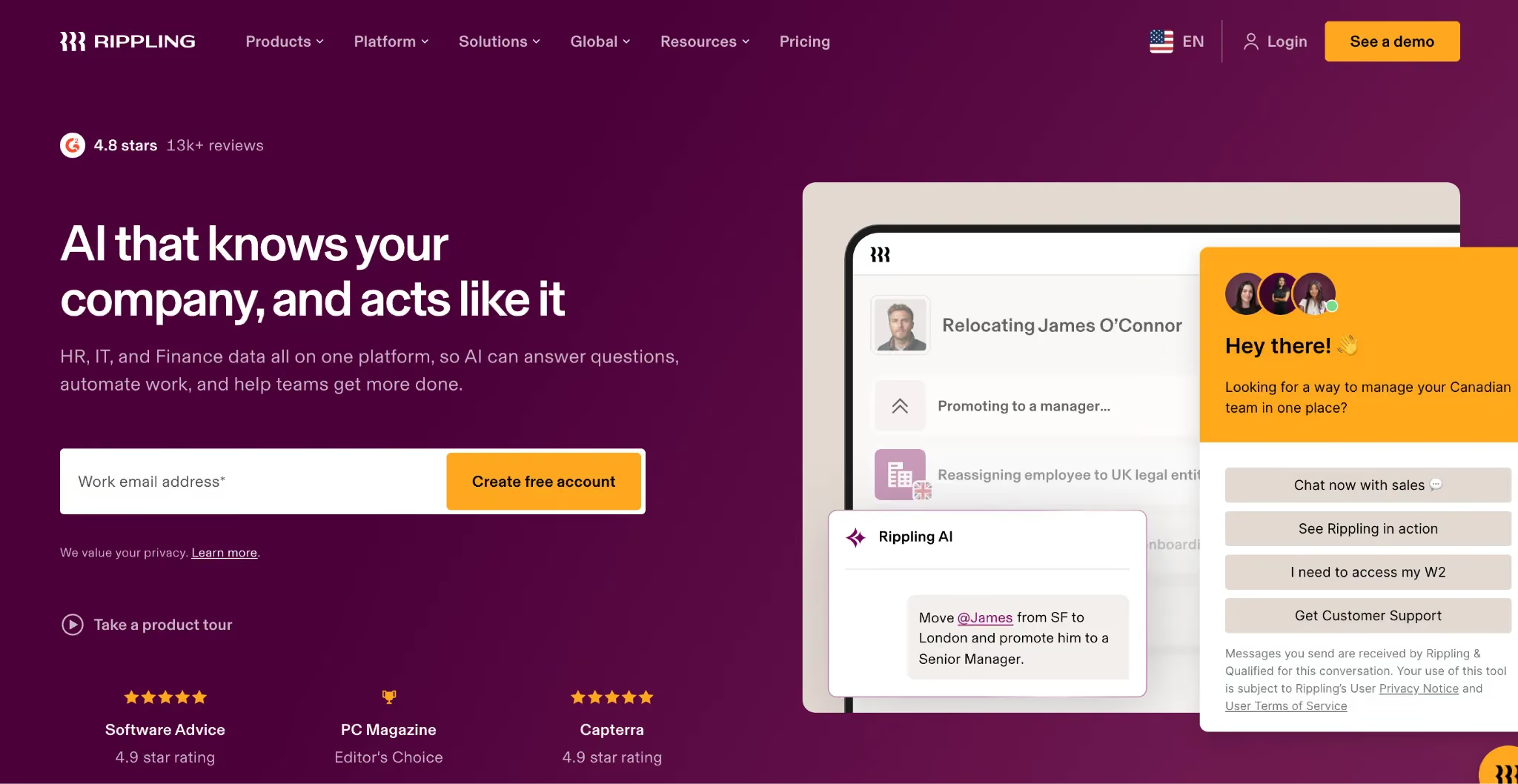
Rippling is less an EOR and more a unified workforce platform, tying together HR, IT, and payroll with heavy automation. EOR is one module inside a much larger system that also provisions laptops and manages apps.
Pricing is custom and varies with the modules you select, and coverage spans 140+ countries. The upside is one system for everything; the downside is that it can get complex and costly if you only need EOR.
For teams standardizing HR, IT, and payroll together, Rippling is compelling. But if global employment is your one real need, a focused EOR will usually be faster to deploy and easier to reason about.
How to Choose the Right Multiplier Alternative
Ignore the marketing and weigh five things. They are what actually determine whether an EOR works once you are live.
- Entity ownership model. Owned entities mean the provider does the employment work itself. Outsourced partners add a middleman and a layer of risk.
- Payroll speed and reliability. Ask for the real timeline and the on-time payment rate, not the brochure version.
- True pricing. Add deposits, pre-funding, and per-action fees to the headline rate before you compare anything.
- Country and worker-type fit. Confirm owned coverage in your specific markets, for both employees and contractors.
- Support quality and automation. In-house, always-on support and genuine automation save you more than any feature list.
Match that to your situation.
A startup making a first hire needs speed, low friction, and no deposit tying up cash. A multi-country scale-up needs owned coverage in every target market and predictable payroll. An enterprise needs payroll depth, analytics, and integrations with existing HRIS.
Then watch for the red flags. Some examples include: hidden deposits buried in the fine print, long country lists where the real work is outsourced and dressed up as "global coverage”, and "AI" that turns out to be a search bar. If a provider dodges direct questions on any of these, that is your answer.
How to Switch From Multiplier Without a Payroll Gap
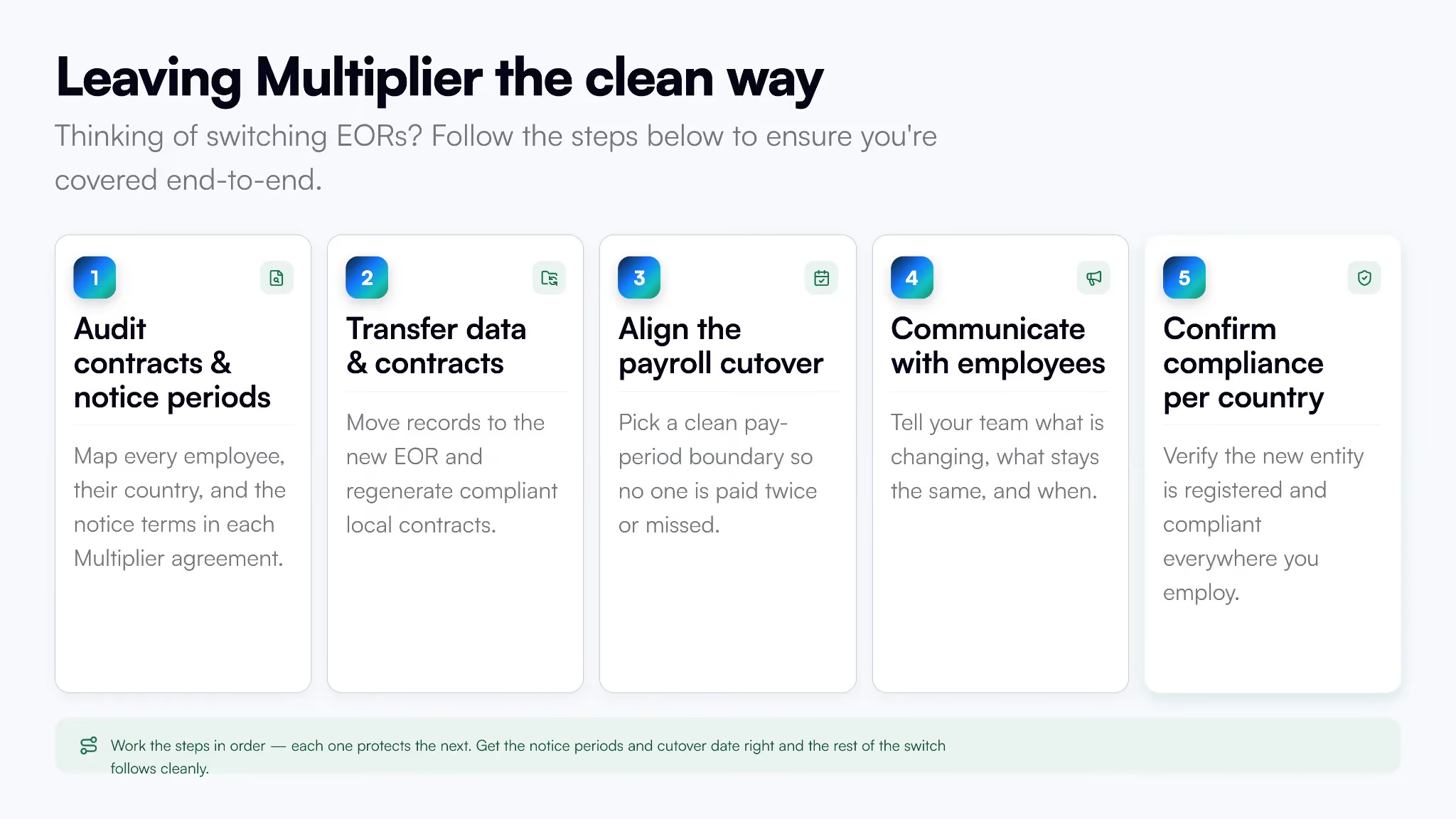
Switching EORs sounds scary and rarely is, as long as you plan the cutover. The goal is simple: no employee ever notices a gap. Here is the sequence.
- Audit contracts and notice periods. Map every employee, their country, and the notice terms in each Multiplier agreement.
- Transfer employee data and contracts. Move records to the new EOR and regenerate compliant local contracts.
- Align the payroll cutover date. Pick a clean pay-period boundary so no one is paid twice or missed.
- Communicate with employees. Tell your team what is changing, what stays the same, and when.
- Confirm compliance in each country. Verify the new entity is registered and compliant everywhere you employ.
The overlap window is your safety net. Keep both providers active across one pay period so no employee is ever between employers. Once the first clean run lands on the new EOR, you offboard from Multiplier with confidence rather than hope.
This is where a modern EOR earns its keep. Borderless AI onboards employees in 5–7 business days and uses AI contract generation to regenerate compliant local agreements fast, which shrinks the overlap window and de-risks the whole move. Its 100% on-time payment record means the cutover run behaves exactly as planned. Plan the date, and the payroll gap simply never happens.
Frequently Asked Questions
How does Multiplier compare to other EOR providers?
Multiplier is a solid mid-market EOR covering ~150+ countries, but rivals differentiate on payroll speed, entity ownership, pricing transparency, and AI-native automation. The best fit depends on your regions and hiring model.
How much does an EOR cost?
Reported starting rates in 2026 range from around $199 to $699 per employee per month, plus any deposits or fees. Always confirm the fully loaded cost, not just the headline price.
Which EOR providers own their own entities?
Borderless AI operates 100% owned entities across 170+ countries, and Remote and Deel own entities in many markets. Others rely partly on third-party partners, so verify coverage in your specific countries.
How do I switch from Multiplier?
Audit your contracts and notice periods, set an overlap window, transfer data and contracts, and align a clean payroll cutover date. Planned properly, employees see no gap.
When should I use an EOR instead of setting up a local entity?
Use an EOR when you want to hire quickly, test a market, or employ a handful of people without the cost and delay of a foreign subsidiary. Setting up an entity makes sense at larger, long-term headcount in one country.
Ready to See the Difference?
Experience Borderless AI with a live demo. See 3-5 day payroll, zero deposits, and 100% owned entities across 170+ countries in action, and get a straight answer to every question on this list.