



Switching an Employer of Record (EOR) provider is a strategic decision that involves legal, financial, and operational changes affecting both your company and its international employees. While many companies start with one EOR, changing business needs, whether expanding into new markets, scaling teams, or addressing service gaps, often make switching providers a strategic necessity.
Why Companies Switch EOR Providers
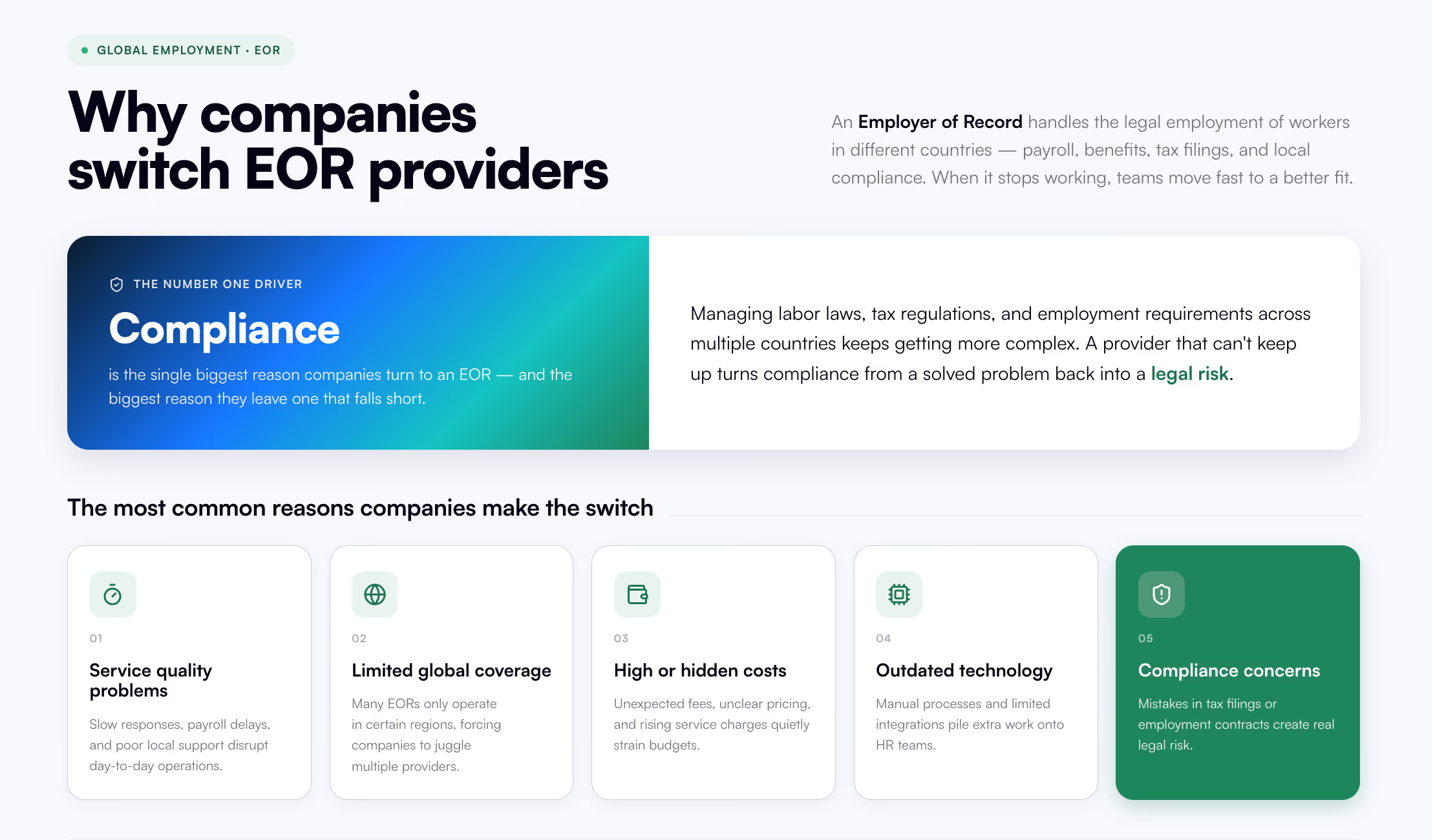
An Employer of Record handles the legal employment of workers in different countries, managing everything from payroll and benefits to tax filings and local compliance. Compliance has become the single biggest reason companies turn to employer of record services, as managing labor laws, tax regulations, and employment requirements across multiple countries is becoming increasingly complex .
The most common reasons companies make the switch include:
- Service quality problems: Slow responses, payroll delays, or poor local support disrupt business operations
- Limited global coverage: Many EORs only operate in certain regions, forcing companies to use multiple providers
- High or hidden costs: Unexpected fees, unclear pricing, or rising service charges strain budgets
- Outdated technology: Manual processes and limited integrations create extra work for HR teams
- Compliance concerns: Mistakes in tax filings or employment contracts create legal risks
For growing companies, switching EOR providers often becomes necessary when expanding into new markets or scaling teams internationally. 87% of companies planning expansion say that meeting local tax and employment regulations will be their hardest task in 2026. The right provider can make global hiring simpler and more efficient.
Key Challenges During EOR Transitions
Switching from one EOR to another involves many moving parts. Understanding these challenges helps companies plan effectively and avoid disruptions.
Employee Data Transfer
Moving employee information between systems requires careful handling and robust data security protocols. This includes personal details, salary history, tax documents, and benefits information. Errors in this process can lead to payroll mistakes or compliance issues.
Critical information that must transfer correctly includes:
- Employment start dates and service history
- Current salary and payment details
- Tax identification numbers and withholding rates
- Accrued leave balances and benefits entitlements
- Historical payroll records for year-to-date reporting
Without proper verification and secure transfer protocols, data can be lost, entered incorrectly, or exposed to security risks, all of which affect employees directly and can create compliance liability.
Compliance Continuity
2026 was a pivotal year for global employment law, with sweeping labour reforms and new EU-wide pay transparency obligations bringing major changes to employment frameworks worldwide. Each country has specific employment laws that must be followed consistently, and during a transition there's a risk of gaps in legal coverage if registrations, work permits, or mandatory benefits aren't maintained properly.
In Canada, for example, employers must ensure continuous coverage for Canada Pension Plan (CPP) contributions. For 2026, the Year's Maximum Pensionable Earnings under CPP is $74,600, with employee and employer contribution rates at 5.95%. Any interruption in these statutory contributions can result in penalties for the employer and gaps in employee pension coverage.
Timeline Management
EOR transitions involve multiple steps that must happen in a specific order. If these steps aren't coordinated between the old and new providers, it can cause payment delays or benefits gaps for employees.
The typical transition involves:
- Contract review and termination notice period
- Data preparation, cleaning, and secure transfer
- System setup and testing with the new provider
- Parallel processing period for verification
- Final cutover to the new system
- Post-transition audit and reconciliation
Proper planning with buffer time built into each phase helps avoid overlaps or gaps in critical services like payroll processing.
What To Look For In A New EOR Provider
Selecting the right replacement EOR requires evaluating several important factors. This evaluation helps ensure the new provider will be a better fit for your company's needs.
Global Coverage
Check if the EOR has legal entities in all countries where you currently have employees or plan to hire. In 2026, companies are no longer simply looking for a provider that can issue local contracts, they want deeper compliance expertise, cleaner technology, clear entity ownership models and predictable costs.
Evaluate:
- Does the provider own entities directly or work through partner networks?
- What is their coverage depth in your priority markets?
- How quickly can they activate new countries if you expand?
- Do they have local teams or rely on remote support?
Direct entities often provide more consistent service and faster response times.
Local Expertise
Each country has unique employment laws, tax rules, and cultural practices. An effective EOR needs deep knowledge of these local requirements to keep your company compliant.
Look for providers that demonstrate:
- In-country legal experts who understand local labour laws and employment contracts
- Proactive monitoring of regulatory changes and updates
- Clear understanding of mandatory and customary benefits by jurisdiction
- Experience with work permit and visa processes
- Track record of compliance audits and zero penalties
This expertise helps prevent compliance issues that could result in fines or legal problems, especially important given the wave of employment law reforms being implemented globally in 2026.
Technology Platform
Modern EORs use technology to automate many employment processes. This reduces manual work and helps ensure accuracy and consistency.
Essential features to evaluate:
- Automated payroll processing with real-time calculations
- Real-time compliance updates and alerts
- Self-service employee portals for payslips and documents
- API integration capabilities with your existing HR and finance systems
- Centralized reporting and analytics dashboards
- Mobile accessibility for global teams
Advanced platforms like Borderless AI use artificial intelligence to streamline processes that traditionally require significant manual effort, reducing errors and accelerating operations.
Cost Structure
EOR pricing models vary significantly. Some charge a percentage of employee salaries, while others use flat monthly fees. Many also require security deposits or pre-funding of payroll.
Evaluate the full picture:
- What is the base fee structure (percentage vs. flat fee)?
- Are there setup fees, termination fees, or minimum commitments?
- What services are included vs. charged separately?
- Is payroll pre-funding required, and how does this affect cash flow?
- Are currency conversion fees transparent and competitive?
Understanding the full cost structure helps avoid surprises later and enables accurate budget forecasting for international hiring.
Planning Your EOR Transition Timeline
A successful EOR switch follows a structured timeline. Each phase has specific tasks that build on previous steps. The entire process typically takes 6-10 weeks, depending on team size, number of countries, and complexity.
The key phases include:
- Planning (2-3 weeks)
- Review current contract terms and termination requirements
- Select new provider and finalize agreement
- Create communication plan for employees and stakeholders
- Assemble transition team and assign responsibilities
- Preparation (2-3 weeks)
- Collect and organize employee data
- Gather compliance documentation by country
- Notify employees about the upcoming change with clear timelines
- Coordinate with both providers on transition logistics
- Active transition (3-4 weeks)
- Set up accounts with new provider
- Transfer and verify employee data
- Configure payroll and benefits systems
- Run parallel processing for at least one full cycle
- Test integrations and reporting
- Completion (1-2 weeks)
- Verify all employees are correctly onboarded
- Confirm first payroll is processed correctly
- Reconcile final invoices with old provider
- Address any outstanding issues
- Conduct post-implementation review
Allowing overlap between the old and new providers—particularly for parallel payroll processing—helps ensure continuous service and reduces risks during the transition. Build in buffer time for unexpected delays or complications, especially in countries with complex regulatory requirements.
Communicating With Employees
Clear communication helps maintain employee trust during an EOR transition. Many employees worry about how changes will affect their pay, benefits, or employment status.
Communication Timeline
Start by announcing the change once the decision is confirmed. Explain why the company is switching providers and what employees can expect during the process. Follow up with regular updates at key milestones.
A simple communication schedule might include:
- Initial announcement (4-6 weeks before transition)
- Detailed information about any changes to benefits or processes (3-4 weeks before)
- Reminder and instructions for any employee actions needed (1-2 weeks before)
- Go-live notification with support contacts (transition day)
- Follow-up confirmation after first successful payroll
Providing dedicated contact information for questions—ideally both from your internal team and the new provider—helps address individual concerns quickly and prevents anxiety from spreading.
Explaining What Changes
Be transparent about what will and won't change for employees. This includes any updates to:
- Payroll schedule or payment methods
- Health insurance carriers or retirement plans
- Time-off request processes and systems
- HR contact information and support channels
- Employee portals and login credentials
Most employees primarily care about getting paid correctly and on time. Reassuring them about these basics—and demonstrating it through successful parallel processing—helps reduce anxiety about the transition.
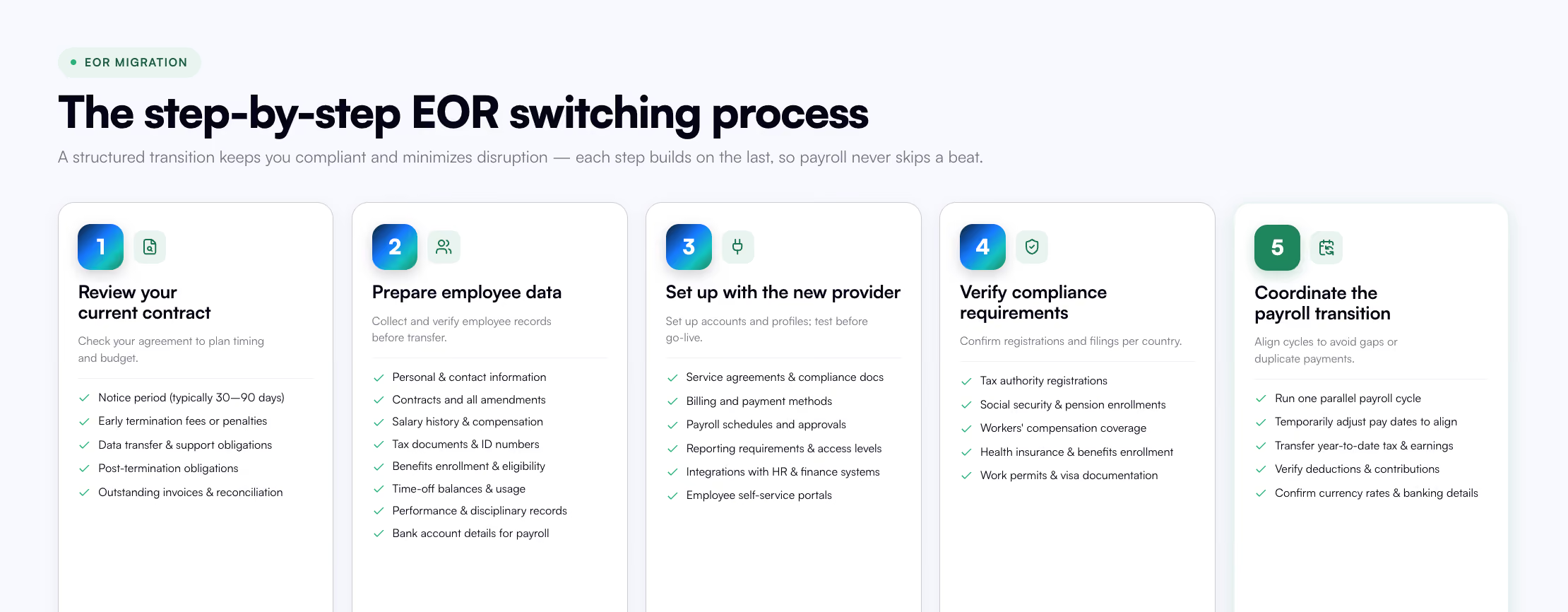
Step-By-Step EOR Switching Process
Following a structured process helps ensure a smooth transition between EOR providers. Each step builds on the previous one to maintain compliance and minimize disruption.
1. Review Current Contract
Start by checking your agreement with the current EOR. Look for:
- Required notice period for termination (typically 30-90 days)
- Early termination fees or penalties
- Data transfer requirements and support obligations
- Post-termination obligations (final reporting, document retention)
- Outstanding invoices or reconciliation requirements
Understanding these terms helps you plan the timing and budget for your transition accurately.
2. Prepare Employee Data
Collect comprehensive information about each employee before beginning the transfer. This includes:
- Personal and contact information
- Employment contracts and all amendments
- Salary history and current compensation structure
- Tax documents and identification numbers
- Benefits enrollment details and eligibility
- Time-off balances and historical usage
- Performance records and disciplinary documentation
- Bank account details for payroll
Verify this information for accuracy before sharing it with the new provider. Clean data prevents downstream errors and speeds up onboarding.
3. Set Up With New Provider
Work with your new EOR to establish company accounts and employee profiles. This involves:
- Completing service agreements and compliance documentation
- Setting up billing and payment methods
- Configuring payroll schedules and approval processes
- Establishing reporting requirements and access levels
- Integrating with existing HR and finance systems
- Setting up employee self-service portals
Prioritize critical functions like payroll processing to ensure business continuity. Test all systems before going live.
4. Verify Compliance Requirements
Confirm that all necessary registrations and filings are in place with the new provider. This includes:
- Tax authority registrations in each jurisdiction
- Social security and pension enrollments
- Workers' compensation coverage
- Health insurance and benefits enrollment
- Work permits and visa documentation
Double-check that these align with local requirements in each country where you have employees. Request confirmation documentation and compliance certificates where applicable.
5. Coordinate Payroll Transition
Align payroll cycles between the old and new providers to avoid gaps or duplications. This may involve:
- Running parallel payrolls for one complete cycle to compare results
- Temporarily adjusting pay dates to align systems if needed
- Transferring year-to-date tax and earnings information
- Verifying that all deductions and contributions are calculated correctly
- Confirming currency conversion rates and banking details
- Testing payment delivery before the official transition date
Clear coordination between providers—ideally with a shared transition calendar and regular status meetings—helps ensure employees are paid correctly throughout the transition.
Common Mistakes When Switching EOR Providers
Learning from common pitfalls can help you avoid costly errors during your transition:
- Rushing the timeline: Trying to switch too quickly increases errors. Build in adequate time for parallel processing and testing, even if it means extending the transition by a few weeks.
- Inadequate employee communication: Surprising employees with changes or providing vague information erodes trust. Over-communicate rather than under-communicate, especially about pay dates and benefits.
- Neglecting data verification: Transferring unverified data leads to payroll errors that are difficult to fix later. Invest time upfront to audit and clean employee data before migration.
- Ignoring country-specific nuances: Applying a one-size-fits-all approach fails in countries with unique requirements. Work with local experts to understand jurisdiction-specific transition requirements.
- Failing to test integrations: Assuming system integrations will work without testing leads to disruptions. Conduct thorough integration testing, including edge cases, before going live.
What Changes For Employees
When switching EOR providers, some aspects of employment change while others stay the same. Understanding these differences helps set clear expectations.
Employment Contracts
The legal employer on paper changes from the old EOR to the new one. This typically requires new employment agreements or amendments to existing contracts. However, the employee's role, responsibilities, and relationship with your company generally remain unchanged.
The new contracts maintain important details like:
- Original start date and service history
- Current position and duties
- Salary and compensation structure
- Vacation entitlement and accrued balances
- Intellectual property and confidentiality terms
These new agreements ensure legal compliance while preserving the employee's employment history and protecting their accrued rights.
Benefits and Payroll
Benefit plans often change during an EOR transition because each provider works with different insurance carriers and benefit administrators. This can affect:
- Health insurance networks and coverage levels
- Retirement plan administrators and fund options
- Additional benefits like wellness programs or life insurance
- Claims procedures and provider contacts
Payroll processes may also change, including:
- Pay dates or frequency
- Payment methods (bank transfer, pay cards, etc.)
- Payslip format and access method
- Tax withholding calculations and reporting
- Currency conversion timing and rates
Mandatory benefits required by local law typically remain consistent in coverage level, though the specific provider or administrator may change.
Hidden Costs To Consider
Beyond the basic service fees, EOR transitions can involve additional expenses that affect the total cost. Being aware of these helps with accurate budgeting.
Termination Fees
Many EOR contracts include penalties for early termination. These can take different forms:
- Flat cancellation fees (typically $1,000-$5,000 depending on contract size)
- Percentage of remaining contract value (often 10-25%)
- Minimum service periods with penalties for early exit
- Charges for transition support and data extraction
- Final reconciliation and audit fees
Review your current agreement carefully to understand these potential costs before setting your timeline. In some cases, negotiating an extended notice period can reduce or eliminate early termination penalties.
Administrative Expenses
The transition process itself can generate additional costs:
- Legal review of new contracts and employment agreements
- Document processing and translation fees for multiple jurisdictions
- Re-registration with government authorities in some countries
- Temporary dual payments during parallel processing periods
- Data migration and system integration costs
- Additional staff time for transition management
- Compliance audits to verify proper setup
These expenses vary by country and provider but can add up, especially for larger teams across multiple countries. Budget 10-15% above your estimated costs to account for these variables.
Finding The Right EOR Solution
Modern EOR providers offer different advantages depending on your company's specific needs. When evaluating options, consider how they address your current pain points and future growth plans.
Key features that differentiate providers in 2026 include:
- Entity ownership transparency: Whether the provider owns entities directly or relies on partner networks directly impacts service quality, speed, and liability
- Technology integration: How well their systems connect with your existing HR, finance, and payroll tools
- Payment reliability: Speed and accuracy of international payroll processing across time zones and currencies
- Support model: Availability and expertise of customer service teams, including local language support
- Pricing transparency: Clear fee structure without hidden costs, minimum commitments, or excessive deposits
- Compliance automation: How they stay current with changing regulations and proactively update processes
- Employee experience: Quality of benefits, self-service tools, and support provided directly to your team members
Borderless AI combines AI-powered automation with human expertise to simplify global employment. Their platform processes payments in minutes rather than days and operates without requiring security deposits or pre-funding, improving cash flow for growing companies.
Frequently Asked Questions About Switching EOR Providers
How long does switching EOR providers typically take?
A complete EOR transition usually takes 6-10 weeks from initial planning to final implementation, depending on team size and the number of countries involved. 86% of HR leaders identify compliance with international labor laws as their top global workforce challenge, and 87% of companies planning expansion say meeting local tax and employment regulations will be their hardest task in 2026.
Do employees need to resign from the old EOR before joining the new one?
Employees typically don't need to resign formally; instead, their employment is transferred from one legal entity to another through new employment agreements that maintain their original start date and service history. This is a transfer of the legal employer relationship, not a termination and rehire.
What happens to accrued vacation time and benefits during an EOR switch?
Accrued benefits like vacation days and sick leave should transfer to the new EOR as part of the employee data migration process, preserving these entitlements without interruption. This should be explicitly documented in the transition plan and verified in new employment contracts.
Can companies expand to new countries while switching EOR providers?
Yes, companies can simultaneously transition existing employees and hire in new countries, though this adds complexity to the process and requires a provider with broad global coverage. It's often advisable to complete the transition first before adding new countries, unless business timing demands otherwise.
How is compliance maintained during the transition period?
Compliance continuity requires careful coordination between both EORs to ensure all legal registrations, tax filings, and mandatory benefits remain active throughout the transition process. 2026 is set to be a pivotal year for global employment law, with sweeping labour reforms and new EU-wide pay transparency obligations making expert guidance during transitions especially important. The new provider should confirm all compliance requirements are met before the old provider terminates legal employment relationships.