


Are employees getting the support they need to grow, or are organizations still expecting people to adapt without enough training, guidance, or opportunity? In 2026, professional career development has become one of the clearest indicators of whether companies are preparing their workforce for what comes next.
From AI adoption and shifting skill needs to mentorship, internal mobility, and online learning, career development is no longer limited to occasional training sessions. It now shapes hiring, retention, engagement, and long-term business performance. Companies that invest in learning are creating real development opportunities for employees and giving them a reason to stay, grow, and contribute more. Those who fall behind risk skill gaps, lower motivation, and higher turnover.
The career development statistics below show how career development is changing, where the biggest gaps still exist, and what employers and professionals should pay attention to in 2026.
What This Statistics Page Is About
This statistics page brings together current research on professional career development in 2026. It covers how work is changing, how workers are adapting, what types of learning people want, where employers are investing, and how development affects engagement, mobility, and retention.
The goal is to provide a clear, data-driven view of what professional career development looks like today, including the opportunities, barriers, and business outcomes tied to workforce growth.
Research Summary
These professional career development statistics were compiled from workforce reports, employer surveys, learning platform data, labor market research, and studies from major institutions focused on jobs, skills, training, and employee development.
Priority was given to recent findings that reflect how AI, automation, internal mobility, and skills-based hiring are reshaping career growth. This collection is useful for HR teams, people managers, business leaders, L&D professionals, and anyone responsible for helping employees build stronger careers.
Key Professional Career Development Statistics
- 44% of workers’ skills are expected to be disrupted in the next five years.
- Six in 10 workers will need training in analytical thinking, creative thinking, AI, big data, and leadership skills before 2027.
- By 2030, 70% of the skills used in most jobs are expected to change.
- 75% of knowledge workers are already using AI at work, but only 39% have received AI training from their employer.
- Only half of workers are believed to have access to adequate training opportunities today.
- 33% of organizations have internal mobility programs.
- 47% of companies are investing in mentoring and coaching to improve retention.
- 84% of employees say learning adds purpose to their work.
- Workers who feel supported to upskill are 73% more motivated.
- Providing learning opportunities is the number one retention strategy for employers concerned about keeping talent.
How Fast Is Career Development Changing in 2026?
Career development is changing because work itself is changing. New technologies, new job titles, and new expectations are reshaping what employers need and what workers must learn to stay competitive. For many professionals, career growth now depends less on what they learned years ago and more on how quickly they can build new skills today.
- Employers estimate that 44% of workers’ skills will be disrupted in the next five years. That means nearly half the workforce may need to adapt to new tools, systems, or job demands in a short period of time.
- Six in 10 workers will require training in analytical thinking, creative thinking, AI, big data, and leadership skills before 2027. This shows that ongoing learning is no longer optional for many employees. It is becoming part of staying employable.
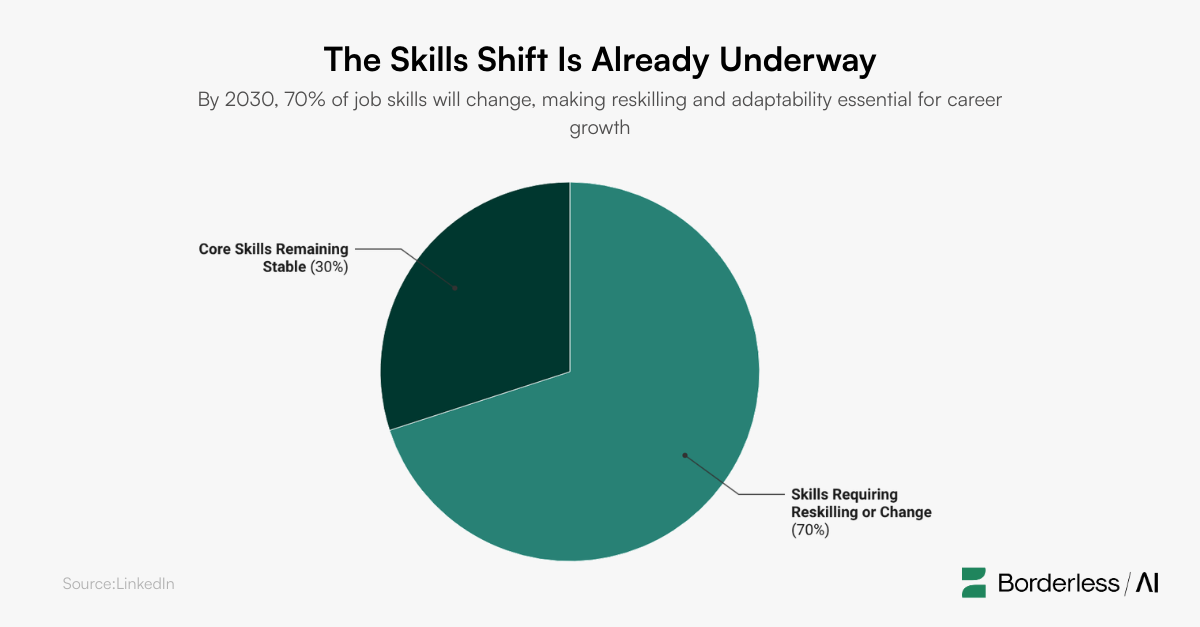
- By 2030, 70% of the skills used in most jobs will change. That is a major shift and a clear sign that career growth will depend heavily on reskilling and adaptability.
- Since 2022, the rate at which LinkedIn members add new skills to their profiles has increased by 140%. Professionals are clearly responding to a changing market by updating their skill sets more aggressively.
- More than 10% of professionals hired today have job titles that did not exist in 2000. The labor market is creating roles that would have been unfamiliar just a generation ago.
- In the United States, that figure rises to 20%. This suggests job evolution is moving even faster in some parts of the market, especially in tech-driven sectors.
How Are AI and Automation Reshaping Career Development?
AI is changing the way people work, the skills companies prioritize, and the kinds of roles that are growing. It is also creating a strange gap: many employees are already using AI, but far fewer are being trained to use it well. That makes AI one of the biggest career development stories of 2026.
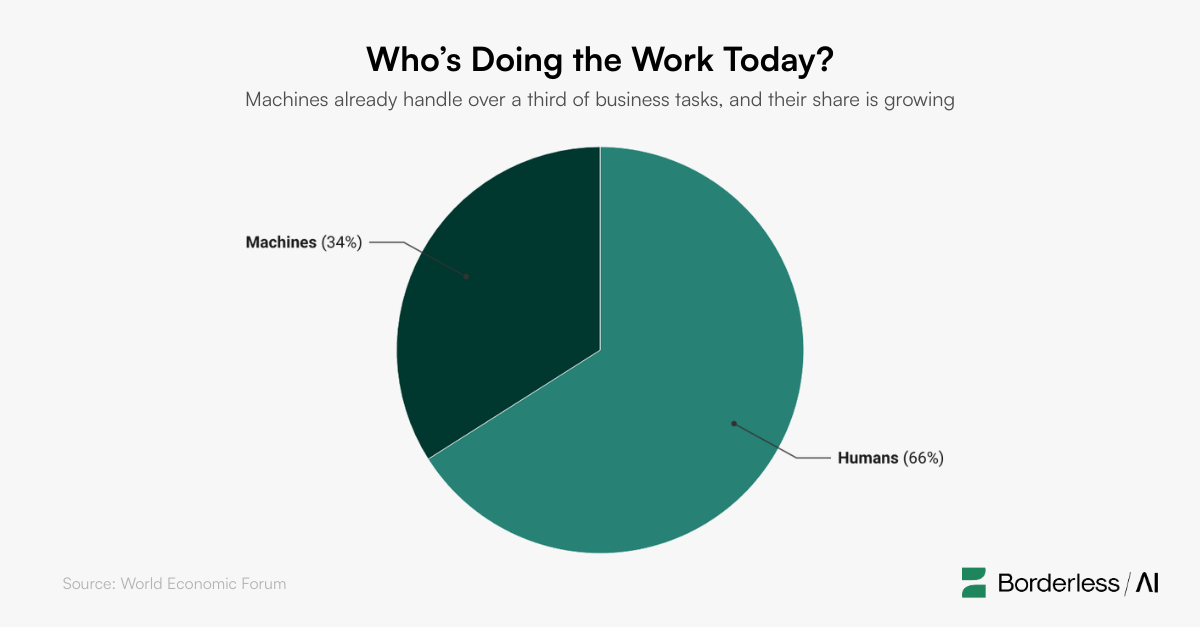
- 34% of all business-related tasks are performed by machines, while 66% are performed by humans. Even now, automation already handles a large share of workplace activity, and that balance is expected to keep shifting.
- Respondents predict that 42% of business tasks will be automated by 2027. This suggests companies are moving quickly toward more tech-driven operations, especially in repetitive or process-heavy work.
- Task automation in 2027 is expected to include 35% of reasoning and decision-making tasks. Automation is no longer limited to routine admin work. It is starting to affect more complex thinking-based tasks, too.
- Task automation in 2027 is expected to include 65% of information and data processing tasks. Data-heavy work remains one of the areas most likely to be reshaped by AI and automation.
- AI is expected to be adopted by nearly 75% of surveyed companies. That level of adoption shows AI is becoming part of everyday business strategy and career growth expectations.
- 50% of organizations expect AI to create job growth, while 25% expect job losses. This suggests many employers see AI as a tool for expansion, although concerns about displacement remain real.
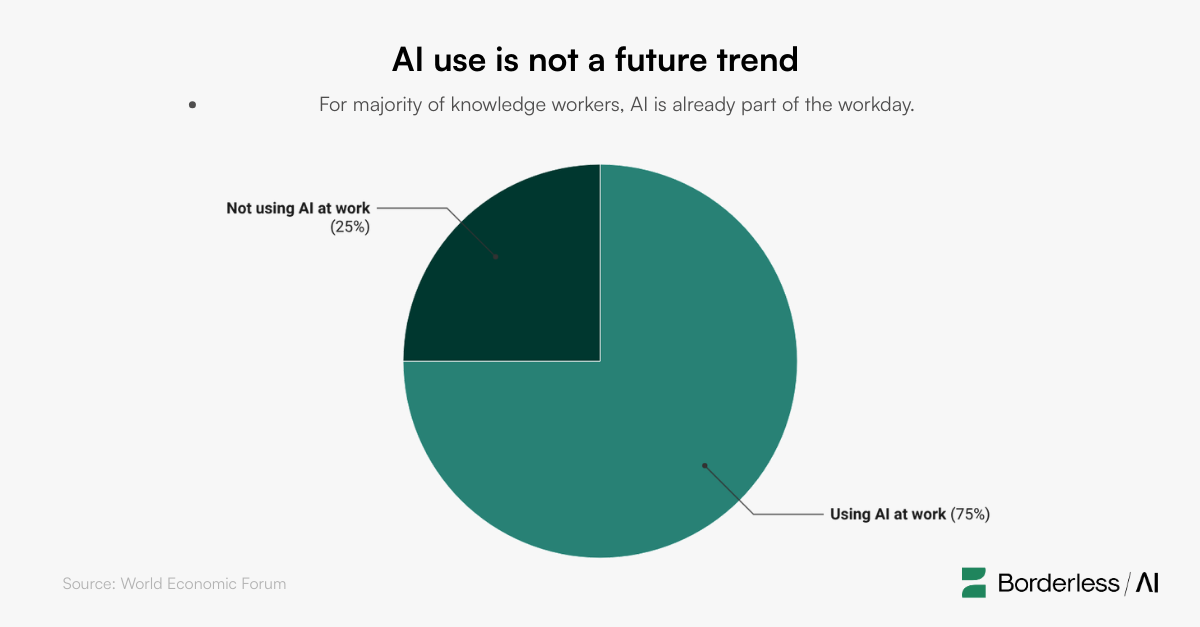
- 75% of knowledge workers are already using AI at work. AI use is not a future trend anymore. For many professionals, it is already part of the workday.
- Only 39% of users have received AI training from their company. That gap matters. Employees are using AI, but many are doing so without formal guidance or support.
- Two-thirds of leaders, or 66%, say AI skills now affect hiring decisions. Employers are not just experimenting with AI. They are actively looking for candidates who can work with it.
- 4 in 5 people want to learn more about how to use AI in their profession. There is a strong appetite for practical AI learning that connects directly to day-to-day work.
- 51% of businesses that adopted GenAI reported a revenue increase of 10% or more. That suggests AI adoption is already producing measurable gains, which helps explain the growing demand for AI-related skills.
What Does the Labor Market Shift Mean for Workers?
Career development is not just about getting promoted anymore. It is also about staying relevant as jobs grow, shrink, or change shape altogether. The labor market data shows that workers are entering a period where transition may be just as common as advancement.
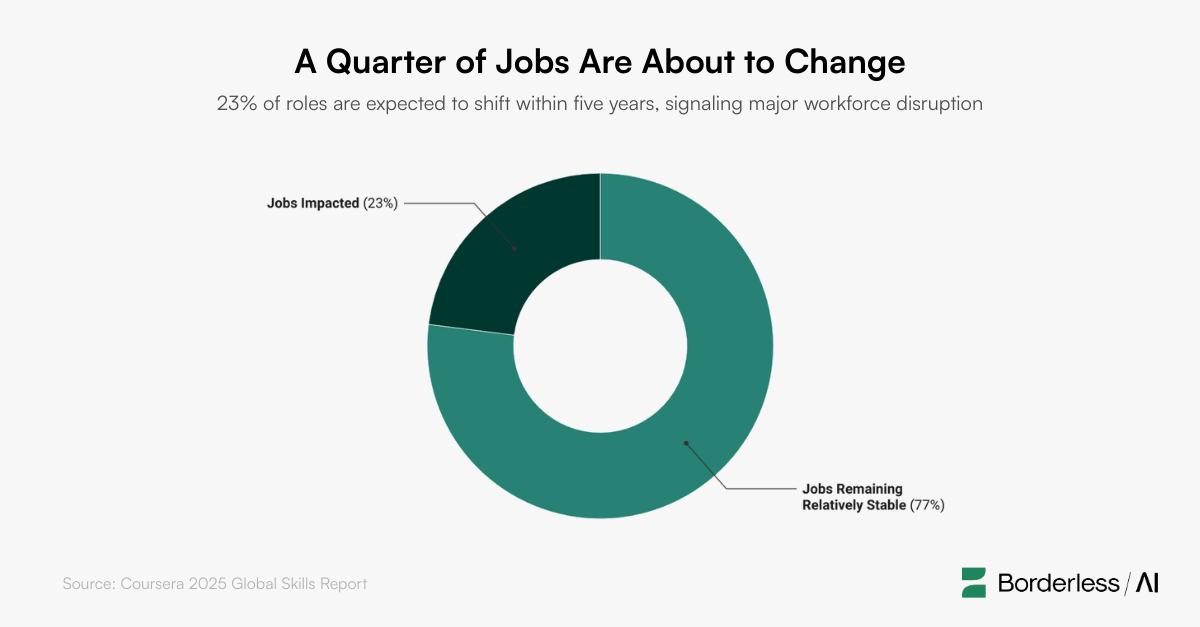
- Employers anticipate a structural labour market churn of 23% of jobs in the next five years. This points to a major reshaping of the workforce, with many roles changing, disappearing, or being newly created.
- Of the 673 million jobs covered, respondents expect structural job growth of 69 million jobs. New technology and changing business needs are creating fresh opportunities, especially in emerging fields.
- Of those 673 million jobs covered, respondents expect a decline of 83 million jobs. While some jobs are growing, others are being phased out, showing that labor market change is happening in both directions.
- This corresponds to a net decrease of 14 million jobs, or 2% of current employment. The overall picture is not just job creation but job transformation, with some workers likely needing to shift into entirely different roles.
How Many Adults Participate in Learning and Skill Development?
Career development matters more than ever, but participation in learning still varies widely. Many adults are engaging in learning opportunities, though access, format, and time commitment all influence who takes part and how.
- Around 40% of adults in Organisation for Economic Co-operation and Development (OECD) member countries participate in learning each year. That means adult learning is fairly common, but there is still a large share of the population missing out.
- National figures range from 58% to 13%. Access to learning varies sharply by country, showing that where someone lives can strongly affect their chances of continuing education.
- Just 8% of adults are enrolled in formal learning programmes. Most adult learning happens outside traditional education systems, which highlights the value of flexible and informal options.
- 37% of adults participate in non-formal job-related learning. This shows that work-focused learning often happens through shorter, more practical formats rather than full academic programmes.
- 46.6% of adults aged 25 to 64 participated in adult learning in the EU in 2022. Nearly half of working-age adults took part, showing just how important ongoing learning has become in the region.
- 86% of EU adult learning participants were only in non-formal learning activities. This reinforces the idea that adult learners are mainly choosing flexible formats over formal study.
- 42% of U.S. adults say they are interested in upskilling or are currently looking for upskilling opportunities. Demand is clearly there, which suggests workers understand the need to keep improving their skills.
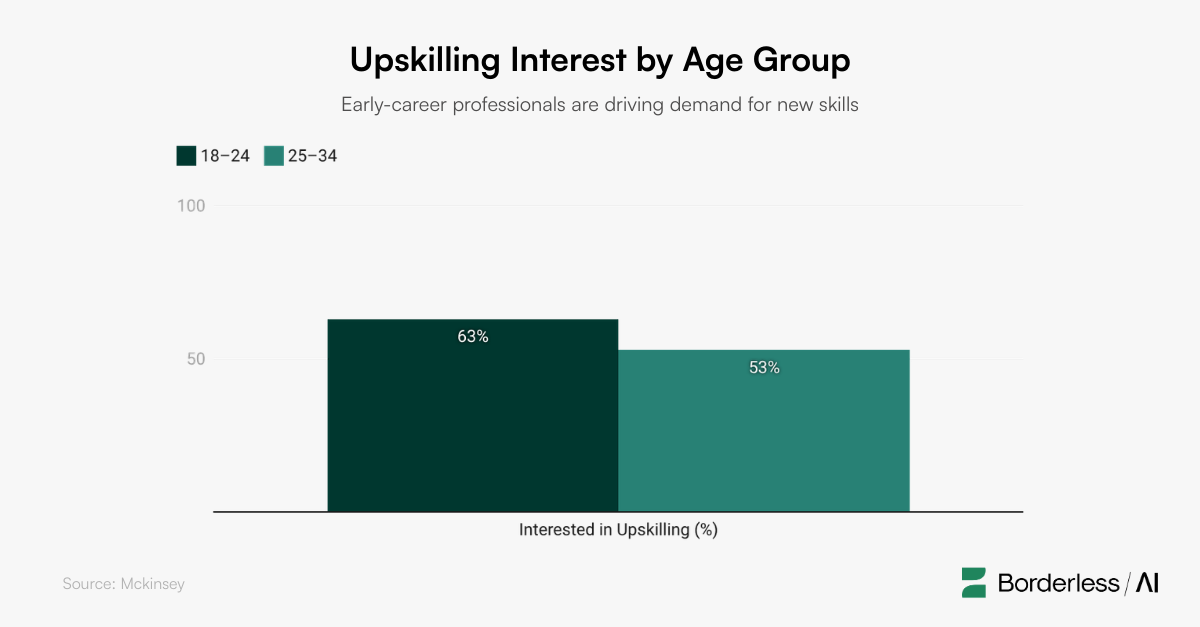
- 63% of workers aged 18 to 24 say they are interested in upskilling. Younger workers appear especially eager to grow, likely because they are still building their careers.
- 53% of workers aged 25 to 34 say they are interested in upskilling. Interest remains high among early-career professionals looking to advance or stay competitive.
What Learning Barriers Are Still Getting in the Way?
Interest in career growth is one thing. Access is another. Many workers want to build skills, but time, support, and even mental well-being can affect whether they are able to follow through.
- Only half of workers are believed to have access to adequate training or employee development opportunities today. Many people are expected to adapt, but not all are being given the support to do so.
- 51% of non-managers, compared with 72% of senior executives, feel they have access to learning and development resources. This gap suggests access to growth opportunities is not evenly distributed across organizations, with junior employees often getting less support than leadership.
- 10% of respondents say mental health obstacles are a challenge to upskilling. Career growth is not just about time and cost. Personal well-being can also affect whether people feel able to learn.
- 42% of non-formal job-related learning activities last one day or less. Many people are learning in quick bursts, which may be easier to fit around work and personal responsibilities.
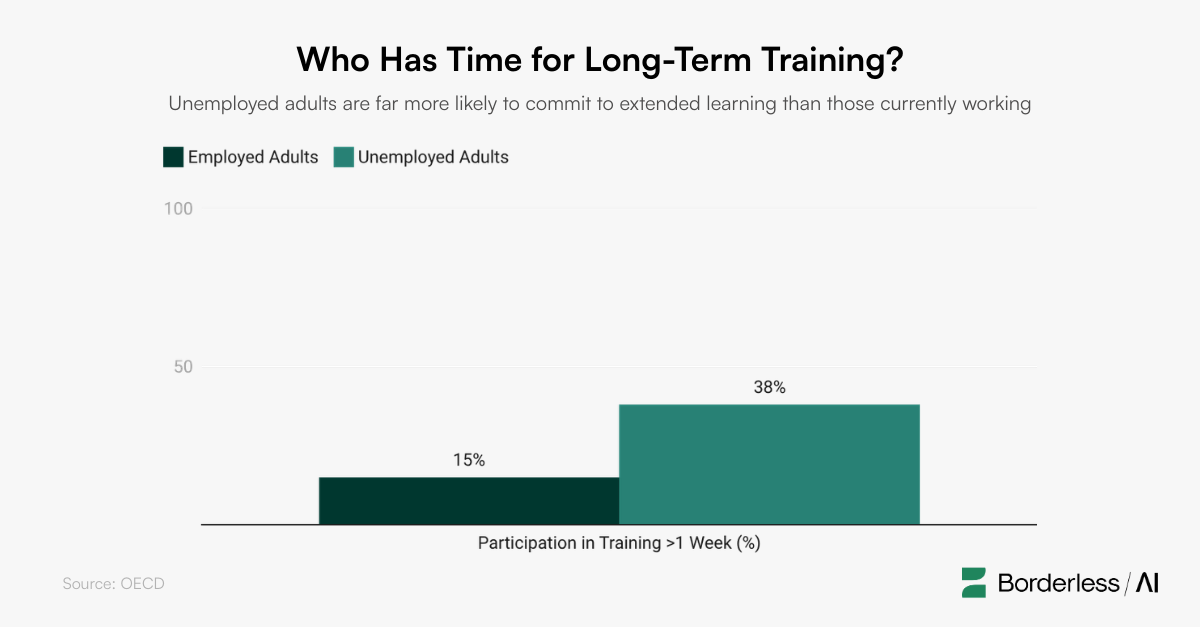
- 15% of employed adults participated in training that lasted longer than a week. Longer training is much less common among employed adults, likely because of time and scheduling pressures.
- 38% of unemployed adults participated in training that lasted longer than a week. People who are out of work may have more time or incentive to commit to longer learning experiences.
- 46% of adults find their non-formal job-related learning very useful. That is a strong signal that practical learning outside formal education can still deliver real career value.
- Another 31% report it was moderately useful. Taken together, most learners see at least some benefit, which supports the case for continued investment in adult learning.
How Much Are Employers Spending on Learning and Development?
Organizations say they care about career development, but budget data shows a mixed picture. Some are increasing investment, while others still lack basic visibility into what they spend and what they get back.
- 59% plan to increase spending on manager development programs in the next two years. Employers appear to be putting more focus on leadership capability, likely because managers have a big effect on team performance and retention.
- 53% of learning and development (L&D) professionals say their overall team workload has increased. Learning teams are being asked to do more, which reflects growing pressure on companies to support development at scale.
- 46% of L&D professionals do not know how much they spend per employee. That lack of visibility can make it harder to measure impact or improve the efficiency of learning programmes.
- 21% of people with learning leadership responsibilities do not have insight into the budget available. In some organizations, even decision-makers lack a full view of learning resources, which can limit planning and strategy.
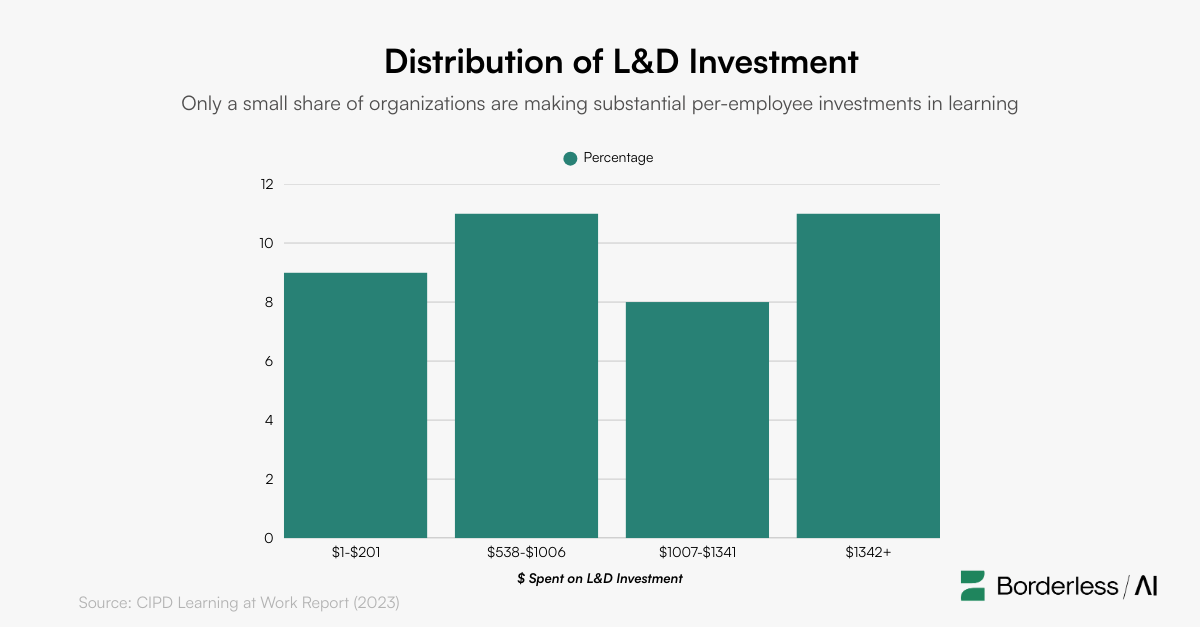
- The most common annual L&D spend band is $203 to $539 (£151 to £400) per employee, cited by 15% of respondents. This suggests many organizations are investing, but often at moderate levels rather than at especially high spending.
- 9% say annual L&D spending falls within $1 to $201 (£1 to £150) per employee. For some employers, learning investment remains quite limited, which may affect the depth or quality of available training.
- 11% say annual L&D spending falls within $538 to $1,006 (£401 to £750) per employee. A smaller share of organizations is investing at a more substantial level.
- 8% say annual L&D spending falls within $1,007 to $1,341 (£751 to £1,000) per employee. Higher spending levels exist, but they are less common and may be concentrated in organizations with stronger learning cultures.
- 11% say annual L&D spending falls within $1,342 (£1,001) or more per employee. This shows that some employers are making a serious financial commitment to workforce development.
- Average learning hours per employee were 13.7 in 2024. That figure gives a useful benchmark, though it also suggests learning time is still relatively limited across the year.
- Average direct learning expenditure was $1,254 per employee in 2024. Employers are spending real money on training, which points to the growing business value attached to employee development.
- The average cost per learning hour was $165, a 34% increase from $123. Training is becoming more expensive, which makes it even more important for organizations to focus on quality and return.
What Learning Formats Do Employees Actually Want?
A learning programme is only useful if people want to engage with it. Workers today are not looking for one rigid format. They want learning that fits their schedule, feels relevant, and helps them apply new skills in real situations.
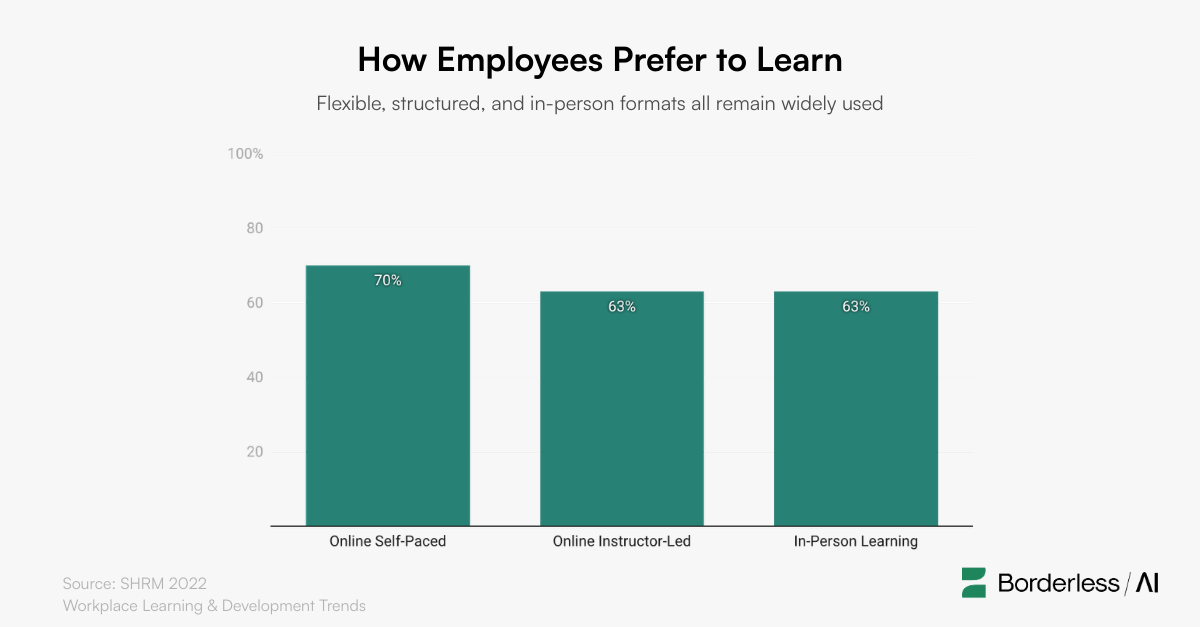
- Online, self-paced courses were cited by 70% of employees. This makes them one of the most widely used learning formats, likely because they offer flexibility and convenience.
- Online, instructor-led learning was cited by 63% of employees. Many learners still value structure and expert guidance, even in a digital setting.
- In-person learning was also cited by 63% of employees. Despite the rise of online options, face-to-face learning continues to hold strong appeal.
- 62% of employees want a hybrid learning method. Workers increasingly want the best of both worlds, combining flexibility with more interactive learning experiences.
- 59% desire an offline, self-paced format. Not every learner wants live sessions or digital-heavy delivery. Independent, offline learning still has a place.
- 64% prefer a simulation learning format. People often want learning that feels practical and realistic, not just theoretical or passive.
- 51% prefer a coaching or mentoring style. This shows that many employees value personalized support and human guidance in their development.
- 61% of non-formal job-related learning happens in the normal working environment. Learning is often happening on the job itself, not in separate classroom-style settings.
- 74% of non-formal job-related learning happens during paid working hours. Employers play a big role in enabling learning when they make time for it during the workday.
Are Learning Technologies Delivering What Organizations Need?
The market for digital learning tools is huge, but using learning technology and using it well are not the same thing. Companies have more platforms and courses than ever, yet many still do not feel especially confident in how they use them.
- LinkedIn Learning offers more than 22,000 courses, including more than 600 AI courses. The scale of available content reflects how broad and fast-moving workplace learning has become.
- LinkedIn made more than 50 AI aptitude learning courses free. Free access can help reduce barriers for workers trying to build new skills quickly.
- Only 12% strongly believe they are innovative with learning technologies. Many organizations may be using learning tech, but far fewer feel they are using it in a truly forward-thinking way.
- Only 14% strongly believe they are successful in using learning technologies. Adoption alone is not enough. Many workplaces still struggle to use learning technology effectively.
How Important Are Internal Mobility, Mentorship, and Coaching?
Professional career development is not only about formal training. People also want visible career paths, real advancement opportunities, and support from others who can help them grow. That is where mobility, mentoring, and coaching become especially important.
- 33% of organizations have internal mobility programs. That means only about one in three employers has formal systems in place to help people move and grow within the company.
- Only 1 in 5 employees has strong confidence in their ability to make an internal move. Even when opportunities exist, many workers may not feel they know how to access them.
- 47% of companies are investing in career mentoring and coaching to boost employee retention. More employers are recognizing that career support can help people stay longer.
- Learners who set career goals engage with learning 4 times more. Clear goals seem to drive stronger motivation, making learning feel more purposeful and relevant.
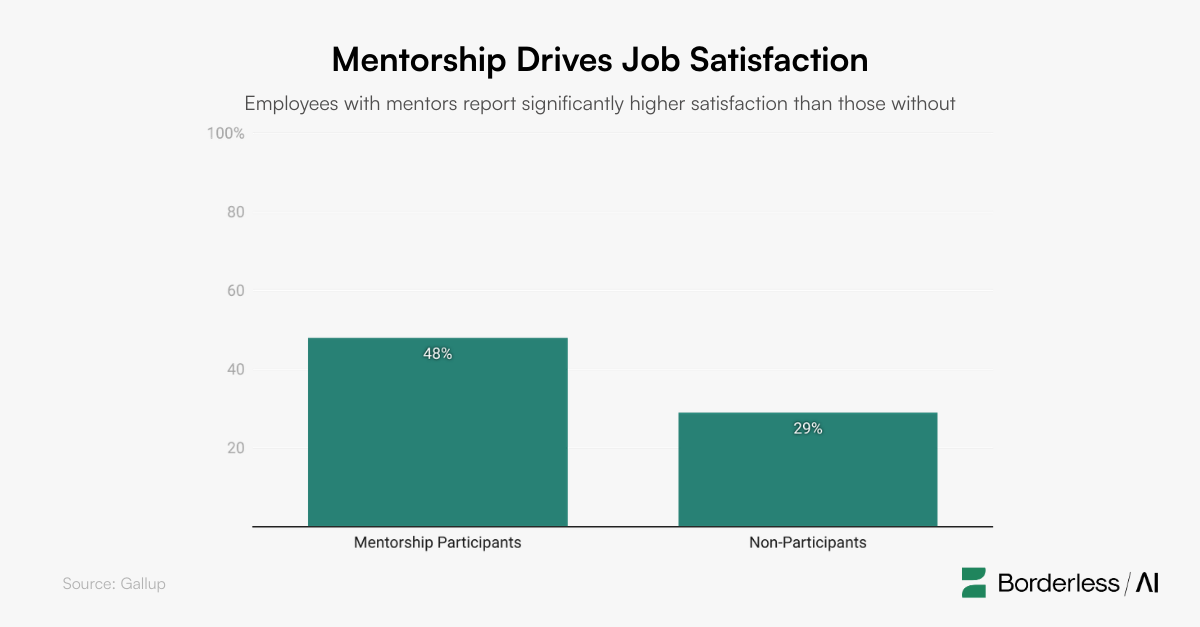
- 28% have participated in mentorship programs. Mentorship is still not universal, which suggests there is room for more organizations to expand access.
- 48% of mentorship participants report high job satisfaction, compared with 29% of non-participants. That gap suggests mentorship can have a meaningful effect on how supported and fulfilled employees feel.
- Only one in three employees at organizations with fewer than 10 workers report that advancement opportunities exist. Smaller workplaces may offer fewer visible paths for growth, which can affect motivation and retention.
- Nearly three in four employees, or 74%, at organizations with 1,000 or more workers report that advancement opportunities exist. Larger employers often have more layers, roles, and pathways for career progression.
How Does Career Development Affect Motivation, Purpose, and Culture?
Learning does more than improve job performance. It can also shape how employees feel about their work, how motivated they are, and whether they believe their workplace supports growth. In other words, career development influences culture as much as capability.
- 84% of employees agree that learning adds purpose to their work. This suggests professional development does more than build skills. It also helps people feel more connected to what they do every day.
- Workers who feel supported to upskill are 73% more motivated. When employees see that their growth matters to the company, they are far more likely to stay engaged and put energy into their work.
- Workers who feel most aligned with their leaders are 78% more motivated. Strong alignment between employees and leadership can boost motivation in a major way, especially when people understand the company’s direction and their place in it.
- Only 56% feel safe trying new approaches at work. That leaves a large share of employees who may hesitate to experiment, which can hold back learning, innovation, and growth.
- Just 54% say their team treats failures as opportunities to learn and improve. In many workplaces, mistakes still may not feel like part of the learning process, and that can make employees less willing to take smart risks.
- 20% worry about a lack of connection and belonging due to more remote or hybrid work. Flexibility has benefits, but it can also make some employees feel less connected to their workplace.
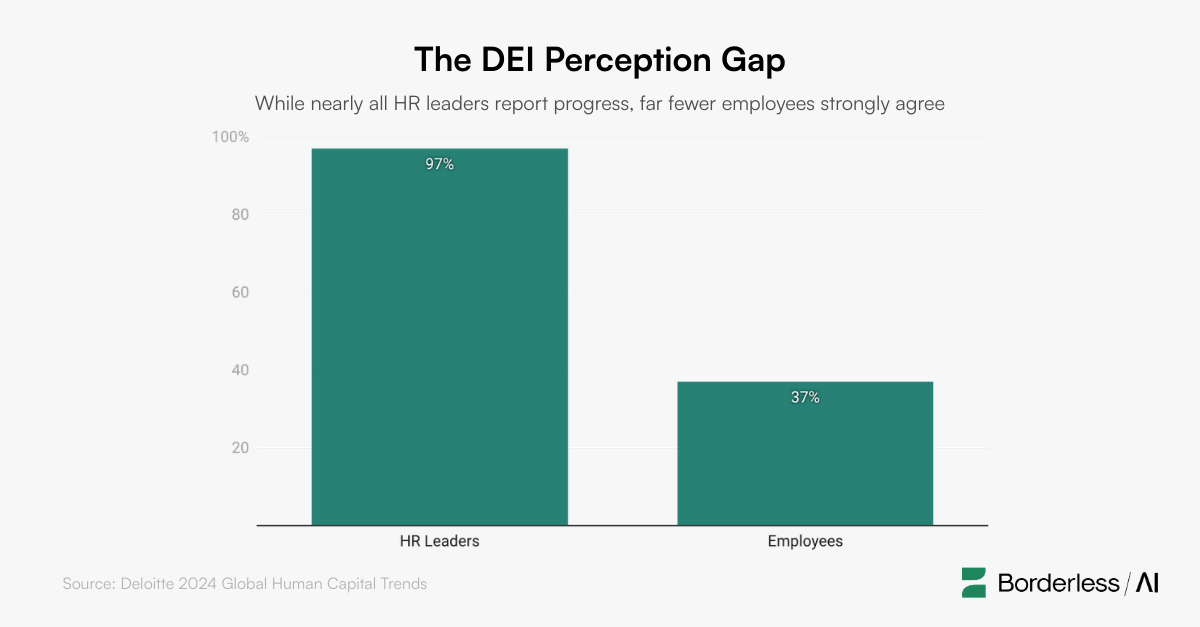
- 97% of HR leaders say their organizations are making changes to improve diversity, equity, and inclusion, but only 37% of workers strongly agree. This gap suggests that leadership intentions do not always translate into employee experience.
What Role Do Online Learning and Credentials Play in Career Growth?
Online learning and alternative credentials have become a bigger part of professional development because they offer speed, flexibility, and a direct link to job skills. For many workers, these options now sit alongside traditional education rather than behind it.
- GenAI enrollments are surging by 195% year over year. Interest in generative AI learning is growing at an extraordinary pace, reflecting how quickly demand is changing.
- GenAI learning has surpassed 8 million enrollments. This is no niche topic anymore. Generative AI has become a major area of professional development.
- Coursera offers nearly 700 GenAI courses on its platform. The growing course supply shows providers are moving fast to meet learner demand.
- GenAI course enrollments reached 12 per minute, up from 1 per minute in 2023 and 8 per minute in 2024. That rise shows just how quickly interest in AI learning has accelerated in a very short time.
- Coursera reached 162 million learners worldwide, including 20 million new learners in 2024. Online learning platforms continue to expand their global reach, bringing career development to a broader audience.
- Coursera recorded 36.7 million enrollments in 2024. Large enrollment volumes suggest online learning remains a mainstream option for skill-building.
- EdX connected to over 83 million learners in 2023. Major platforms continue to play a large role in how people access education and career-focused training.
- EdX reports a 73% graduation rate for degree programs, 76% for boot camps, and 90% for executive education. Completion rates vary by format, but these figures suggest strong outcomes, especially in shorter or more targeted programs.
- 85% of students say earning a microcredential improves job prospects. Learners increasingly see shorter credentials as a practical way to strengthen employability.
- 91% of students believe a microcredential will help them succeed once employed. These credentials are not just seen as useful for getting a job, but also for performing well after being hired.
- There are 1,076,358 unique credentials in the United States. The credential landscape is huge and growing, which gives learners more options but may also make navigation more confusing.
- 14% of LinkedIn recruiter searches in the OECD context are filtering by skills only. Skills-based hiring is gaining ground, even if traditional qualifications still matter in many cases.
Does Career Development Actually Improve Retention and ROI?
Employers often talk about learning as a benefit, but training and employee retention statistics increasingly frame it as a business tool. Career development affects how long employees stay, how motivated they feel, and how quickly companies see value from workforce investment.
- Two-thirds of companies expect to see a return on investment on skills training within a year. That suggests many employers view training as a practical business investment, not just a staff perk.
- Training in AI and big data is prioritized by 42% of surveyed companies. Employers are focusing heavily on technical capabilities that support innovation, automation, and data-driven decision-making.
- Leadership and social influence training is prioritized by 40% of companies. At the same time, human-centered skills remain in high demand, especially in roles that involve managing people and change.
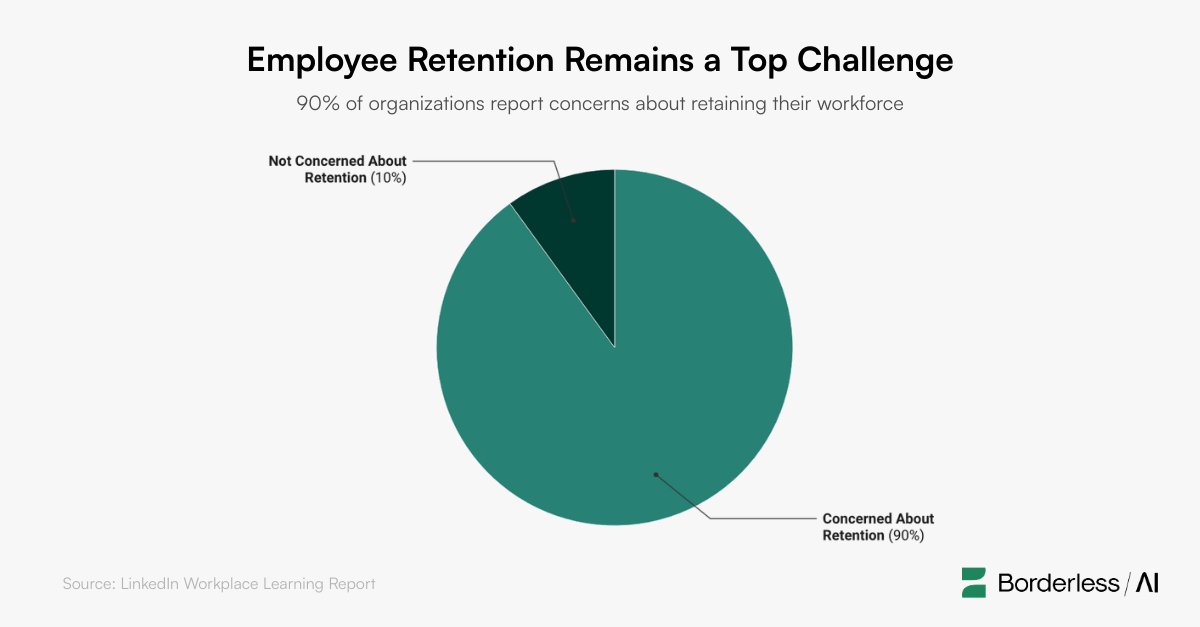
- 90% of organizations are worried about employee retention, and learning opportunities are the number one retention strategy. This shows how closely career development is tied to whether employees stay or leave.
What Professional Career Development Trends Are Defining 2026?
Career development in 2026 is shaped by speed, flexibility, and relevance. Workers are building skills faster, employers are rethinking what counts as job readiness, and AI is changing both job content and learning priorities at the same time.
AI adoption is pushing organizations to focus more on practical, job-connected learning rather than broad theory alone. At the same time, the rise in microcredentials, online learning, and skills-based hiring suggests that career growth is becoming more modular and more continuous.
The big trend is clear: career development is moving away from occasional training and toward a model where employees learn in shorter cycles, closer to the work itself, and with a stronger link to business needs.
Career Development Will Define the Strongest Workforces in 2026
The professional career development statistics of 2026 point to a simple reality: employees are being asked to adapt faster than ever, and the organizations that support that growth will be in a much stronger position than those that do not.
These professional development statistics show that learning is tied to motivation, retention, purpose, mobility, and business performance. Employees want opportunities to upskill. Employers want teams that can keep up with change. Career development sits right in the middle of both.
What stands out most is the gap between expectation and access. Workers are eager to learn, but many still lack the time, resources, support, or clarity they need. Closing that gap will matter not just for employee growth, but for business resilience too.
The companies moving ahead in 2026 will not treat professional development as a side initiative. For organizations building global teams, managing hiring and compliance across countries can quickly become complex. This is where services like Borderless AI can help. As an employer of record service, Borderless AI allows companies to hire internationally without setting up local entities, making it easier to focus on developing talent and building stronger teams.
Reference List
Association for Talent Development. 5 Things TD Leaders Need to Know. assets.td.org/m/439253a62d390bb8/original/UPDATED-RR-5-Things-TD-Leaders-Need-to-Know_SOIR.pdf.
Blog.Coursera. 2024’s Rising Content and Fastest-Growing Skills for 2025. blog.coursera.org/2024s-rising-content-and-fastest-growing-skills-for-2025/.
CIPD. Learning at Work Survey Report 2023. www.cipd.org/globalassets/media/knowledge/knowledge-hub/reports/2023-pdfs/2023-learning-at-work-survey-report-8378.pdf.
Credential Engine. Counting Credentials 2022. credentialengine.org/wp-content/uploads/2023/01/Final-CountingCredentials_2022.pdf.
Deloitte. Global Human Capital Trends Report (PDF). image.marketing.deloitte.de/lib/fe31117075640474771d75/m/1/96cf5d94-ee17-40a7-beca-f4e5e8f8ae72.pdf.
edX. 2023 Transparency Outcomes Report. press.edx.org/2023-transparency-outcomes-report.
Eurostat. Adult Learning Statistics: Participants. ec.europa.eu/eurostat/statistics-explained/index.php/Adult_learning_-_participants.
Gallup. One in Four Employees Lack Advancement Opportunities. news.gallup.com/poll/695996/one-four-employees-lack-advancement-opportunities.aspx.
Gartner. Gartner HR Leaders Survey Reveals Top Two Priorities in 2024. www.gartner.com/en/newsroom/press-releases/2023-11-07-gartner-hr-leaders-survey-reveals-top-two-priorities-in-2024.
LinkedIn Economic Graph. Work Change Report (PDF). economicgraph.linkedin.com/content/dam/me/economicgraph/en-us/PDF/Work-Change-Report.pdf.
LinkedIn Learning. LinkedIn Workplace Learning Report 2024. learning.linkedin.com/content/dam/me/business/en-us/amp/learning-solutions/images/wlr-2024/LinkedIn-Workplace-Learning-Report-2024.pdf.
LinkedIn Learning. LinkedIn Workplace Learning Report 2025. learning.linkedin.com/content/dam/me/learning/en-us/images/lls-workplace-learning-report/2025/full-page/pdfs/LinkedIn-Workplace-Learning-Report-2025.pdf.
Lumina Foundation. Micro-Credentials Impact Report 2025. www.luminafoundation.org/wp-content/uploads/2025/05/Micro-Credentials-Impact-Report-25.pdf.
McKinsey & Company. The Upskilling Imperative: Required at Scale for the Future of Work. www.mckinsey.com/industries/public-sector/our-insights/the-upskilling-imperative-required-at-scale-for-the-future-of-work.
Microsoft and LinkedIn. 2024 Work Trend Index on the State of AI at Work. news.microsoft.com/source/2024/05/08/microsoft-and-linkedin-release-the-2024-work-trend-index-on-the-state-of-ai-at-work/.
OECD. Empowering the Workforce in the Context of a Skills-First Approach. www.oecd.org/en/publications/empowering-the-workforce-in-the-context-of-a-skills-first-approach_345b6528-en.html.
OECD. Trends in Adult Learning. www.oecd.org/en/publications/trends-in-adult-learning_ec0624a6-en.html.
OECD. Trends in Adult Learning (PDF). www.oecd.org/content/dam/oecd/en/publications/reports/2025/06/trends-in-adult-learning_f0d8514f/ec0624a6-en.pdf.
OECD. Why Is Participation Not More Common? In Trends in Adult Learning. www.oecd.org/en/publications/trends-in-adult-learning_ec0624a6-en/full-report/why-is-participation-not-more-common_73893b53.html.
PwC. Global Workforce Hopes and Fears Survey. www.pwc.com/gx/en/issues/workforce/hopes-and-fears.html.
SHRM. 2022 Workplace Learning and Development Trends Report (PDF). www.shrm.org/content/dam/en/shrm/research/2022-Workplace-Learning-and-Development-Trends-Report.pdf.
World Economic Forum. The Future of Jobs Report 2023: Digest. www.weforum.org/publications/the-future-of-jobs-report-2023/digest/.
.png)