



Employer of Record in Finland
An Employer of Record (EOR) can employ someone in Finland without your company setting up a Finnish entity. If your company will direct the person's daily work, use an agency-work arrangement with the employee's consent. Before making an offer, establish which Finnish collective agreement applies. It can determine how many hours the salary covers and which payments you owe on top of it. Employment Contracts Act
Employment in Finland at a glance
Private-sector employment in Finland. Sector agreements, the work schedule and the employee’s coverage can change individual terms. Sources checked 9 November 2026.
EOR and hiring options
In a Finnish agency-work arrangement, the provider signs the employment contract, pays wages, arranges insurance and handles employer reporting. Your company directs and supervises the work, handles day-to-day safety and gives the provider the worksite, hours and hazard information it needs. Agency workers generally have access to shared workplace facilities on the same terms as your employees, subject to objectively justified differences. Where Finland's contractor-liability rules apply, obtain the required provider checks before signing, including proof of pension insurance and information on employment terms and occupational healthcare. Agency work totaling at most ten working days is generally exempt from that check requirement. Brief breaks between assignments can count as continuous work. Agency-work duties · Employment Contracts Act · Contractor Liability Act
The ordinary Finnish agency-work framework does not impose a general staffing licence or a single maximum assignment length. Sector agreements can restrict when and for how long a client uses agency labour. Confirm any sector permissions and the terms on both sides of the assignment before relying on this route for a continuing role. If the work involves carrying on business in Åland, separately check the islands’ business licence rules. Agency-work framework · Åland business rules
A foreign company can also hire directly in suitable cases. It remains the employer and may have Finnish insurance and reporting duties even without a Finnish permanent establishment. Hiring through your own Finnish company gives you the direct employment relationship and responsibility for local payroll. A payroll processor can administer pay while your company retains the employer duties. Independent contracting fits work carried out on an independent basis. If you need to direct and supervise the person as an employee, plan for employment. If the person will negotiate or conclude contracts in Finland, assess your company's tax presence separately from the employment route. Foreign employer duties · Finnish tax presence · Hiring without a local entity
Employment costs
For a €5,000 gross monthly salary, budget about €5,966 to €6,012 per month for salary and the three contributions below, using 2026 rates. This is a partial payroll subtotal. Accident insurance, occupational healthcare, any agreement-based extras and the EOR fee still need to be priced. Recheck the rates for pay in 2027.
Illustrative hire. An indefinite, full-time, office-based operations specialist in Helsinki, age 35, employed through a Finnish agency with a pension insurance contract and covered by Finnish social insurance. The assumed €60,000 annual base is twelve months of ordinary gross pay. The calculation uses cash base salary as the contribution base and excludes variable pay and taxable benefits. 2026 contribution rates
The unemployment band depends on the legal employer's payroll. An employer close to the threshold could pay both rates on portions of the additional wages. The monthly figures spread the subtotal over 12 months for planning. The actual bill depends on the pension policy, the timing of extras and the provider's invoice terms.
Add the accident insurance premium, preventive occupational healthcare and group life cover where required. Price the applicable holiday bonus, shift premiums or other agreed remuneration and their payroll charges separately. Get a separate EOR administration quote. Keep optional benefits such as extended medical cover, and one-time items such as equipment or permit support, separate from recurring payroll. Use the role, work location, applicable agreement, pay and start date to get a quote. Insurance rules · Finland hiring cost breakdown
Payroll and taxes
Set the pay period and payday in the employment terms. The default payday is the last day of that period unless otherwise agreed. The employer applies the employee's tax card as appropriate and deducts the employee's contributions from gross pay. In 2026, the ordinary employee shares are 7.30% for TyEL and 0.89% for unemployment insurance where covered. These are funded from gross pay. Employer health insurance is a separate employer charge for covered employees. Payday rules · Contribution rates
The payroll report supplies data to authorities and insurers. Plan for the payments as well as the filing dates, and use the EOR agreement for the timing of your own invoice. Reporting deadlines · Employer remittances · Employment Fund billing
Contracts and employment terms
Put the legal employer, role, work location, applicable collective agreement, pay, hours and any probation in writing before the start. Finnish law allows oral or electronic contracts and requires the employer to supply key terms in writing if the contract does not include them. An agreed trial period normally lasts up to six months and can cover at most half of a fixed term. For remote work, record the agreed work location and how the client and provider will manage hours and safety. Employment contract guidance · Remote work duties
Indefinite employment is the default. Since 1 June 2026, a fixed term of up to one year can be agreed without the usual justification when it is the first employment relationship between that employer and worker in the preceding five years. That exception comes with duties to explain prospects for continuing employment and, in some cases, offer further work. Check the worker’s history with the legal employer before using it. 2026 fixed-term amendment
How the agreement changes the offer
For an agency hire, start with the qualifying collective agreement binding on the agency or generally binding for its work. If none applies, the agency must apply the qualifying agreement binding on the user company or generally binding there. If neither applies, the user company's binding, generally applied arrangements or practices set the minimum for pay, hours and annual leave. A generally binding agreement can apply even if the employer did not join the association that negotiated it. Employment Contracts Act · Collective agreement register
For example, where the personnel-sector agreement governs a leased office, finance or ICT role, its ordinary schedule is 37.5 hours a week and its holiday-return bonus can be 50% of holiday pay, subject to the agreement's timing and eligibility rules. The agreement also allows a written switch to a qualifying generally binding user-company agreement under specified conditions. If your team needs 40 hours of coverage, settle how the extra 2.5 hours will be scheduled and paid under the agreement before you price the hire. Put the regular hours in the offer and ask payroll to itemize the holiday bonus and its contributions separately. Personnel-sector agreement
Working hours, leave and holidays
Hours and premiums. Under general working-time rules, overtime can arise above eight hours in a day or 40 in a week. A shorter agreed week can also create additional paid hours below the statutory overtime threshold. The basic daily overtime premium is 50% for the first two hours and 100% thereafter. Covered Sunday and public-holiday work normally carries a 100% premium, plus overtime premium if both apply. Check the relevant agreement and working-time system before setting shift coverage. Working Time Act
Annual leave. The leave year runs from 1 April to 31 March. A qualifying month generally requires at least 14 days worked or credited, or 35 hours under the alternative accrual rule. With 12 qualifying months at the higher rate, 30 statutory weekdays normally cover five weeks because Saturdays usually count. The usual summer allocation is up to 24 days in the 2 May to 30 September holiday season. Keep statutory holiday pay and any separate holiday bonus distinct. Annual Holidays Act · Holiday pay and bonus
Holidays and other leave. Check the Finnish calendar against the actual roster. Under the statutory leave count, Midsummer Eve and Christmas Eve do not use up annual leave days. The agreement and roster determine whether those dates are otherwise days off. For sickness, the statutory baseline after at least one month of employment is full pay through the ninth statutory weekday after the day of illness, subject to the statutory allowance cutoff. Before one month, the baseline is half pay. Agreements can extend sick pay. Eligible parents can receive Kela allowances, normally 40 working days of pregnancy allowance for the pregnant parent and 160 working days of parental allowance per parent in a two-parent family. Check the agreement for any employer-paid periods. Holiday calendar · Leave counting · Sick pay · Kela family benefits
Employee benefits
The legal employer arranges earnings-related pension coverage and applicable accident and unemployment insurance. Accident and occupational disease insurance is required when the employer's annual payroll exceeds €1,500. The premium depends on the policy and the risk of the work. Group life assurance applies where the relevant national collective agreement requires it. Workers' compensation · Group life terms
Employers also arrange and fund preventive occupational healthcare, including for office workers. General-practitioner care can be added voluntarily. Check what the occupational-health package includes and price optional benefits, such as broader medical care or meal benefits, separately. The client should share workplace risks with the provider so the preventive service reflects the work. Occupational healthcare · Worksite duties
Onboarding and work authorization
- Before making the offer, settle the employment terms. The provider and client confirm the legal employer, assignment consent, duties, location and applicable agreement. The provider prepares the contract, including the pay schedule. The client supplies the worksite and safety details. Contract and agency-work terms
- Before work starts, verify work rights and insurance. EU, EEA and Swiss nationals can generally work without a residence permit and normally register residence if staying longer than three months. For other candidates, check whether the worker's existing authorization covers the job and employer or whether a permit is needed first. The provider confirms workers’ compensation coverage is in force before the first shift and arranges preventive occupational healthcare. Right to work · Accident cover · Occupational healthcare
- At onboarding and first pay, meet the separate reporting clocks. For a qualifying non-EU/EEA hire with a valid permit and right to work already in place, the employer generally submits an employee announcement to Migri within seven days of the start online. Where a paper filing is allowed for a special reason, the deadline is ten days. For a contract employer, confirm the TyEL policy number and payroll details before first pay so the wage report can go in within five calendar days of payment. Employer announcement rules · TyEL setup · Wage reporting
A new residence permit can determine the start date. For example, the 2026 employed-person permit (TTOL) has a €1,600 monthly gross income minimum and may involve labour-market testing. The applicable agreement can require higher pay. Match the candidate to the correct permit category before confirming the start. Permit income rule · Permit requirements
Termination and final pay
A client can end an assignment under its service agreement. The legal employer must separately decide whether the employment can end and follow the applicable process. Since 1 January 2026, dismissal on employee-related grounds requires a proper reason assessed in context. For misconduct or neglect, a warning and a chance to improve are generally required, and the employee must have a chance to be heard before dismissal. Redundancy still requires a proper and weighty reason, a substantial and permanent reduction in work and an assessment of other work or training. Consultation can apply. 2026 dismissal amendment · Termination process
Default employer notice runs from 14 days for up to one year of service to six months after more than 12 years. Employee notice is normally 14 days through five years and one month after that. Check the agreement and contract for applicable terms. A lawful dismissal carries no general statutory severance requirement, though an agreement can add obligations. Budget for notice pay where due, unpaid earnings and compensation for unused accrued holiday. Final wages are generally due at the end of employment unless a later date has been validly agreed. Employment Contracts Act · Final pay guidance · Finland employment law guide
Hiring with Borderless
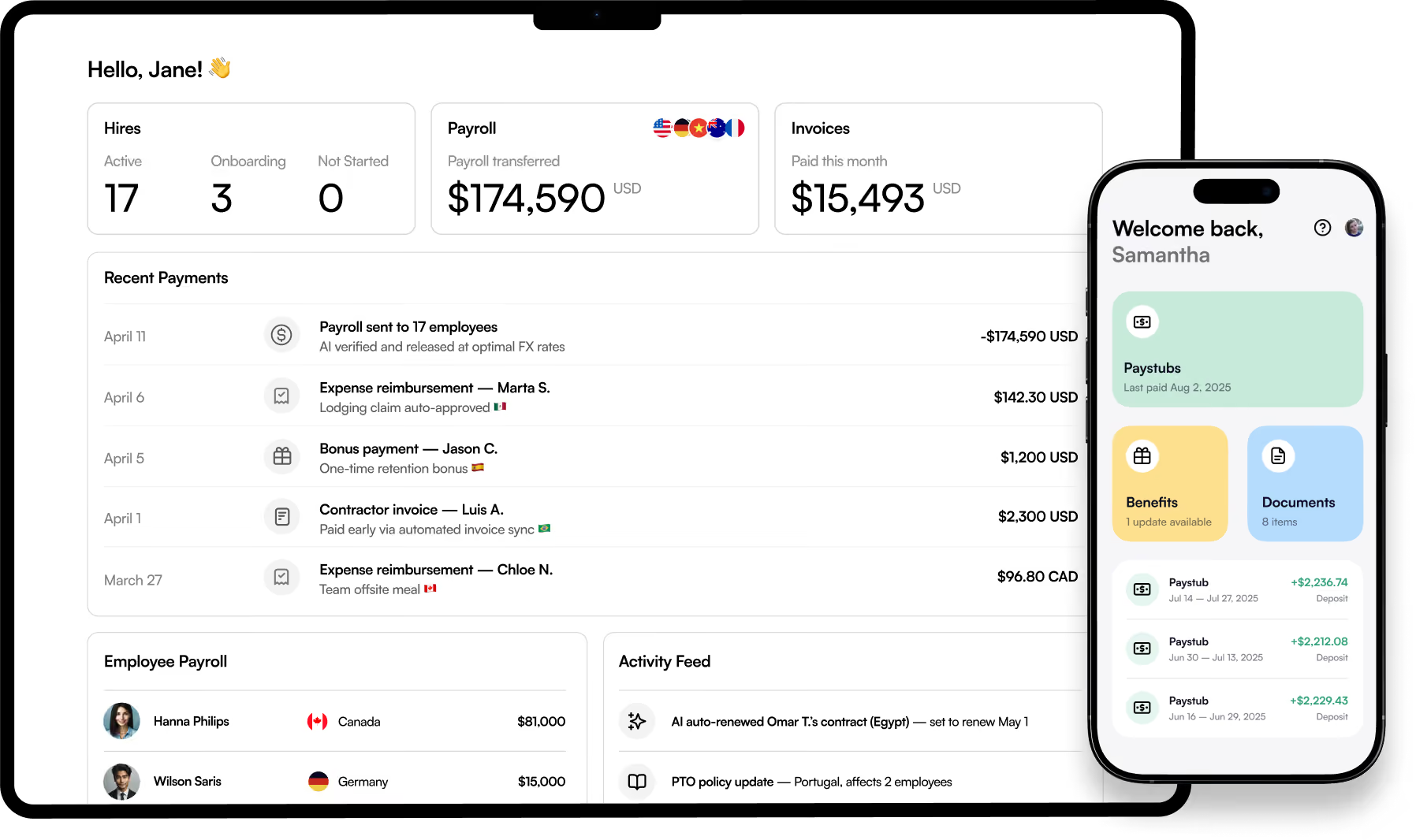
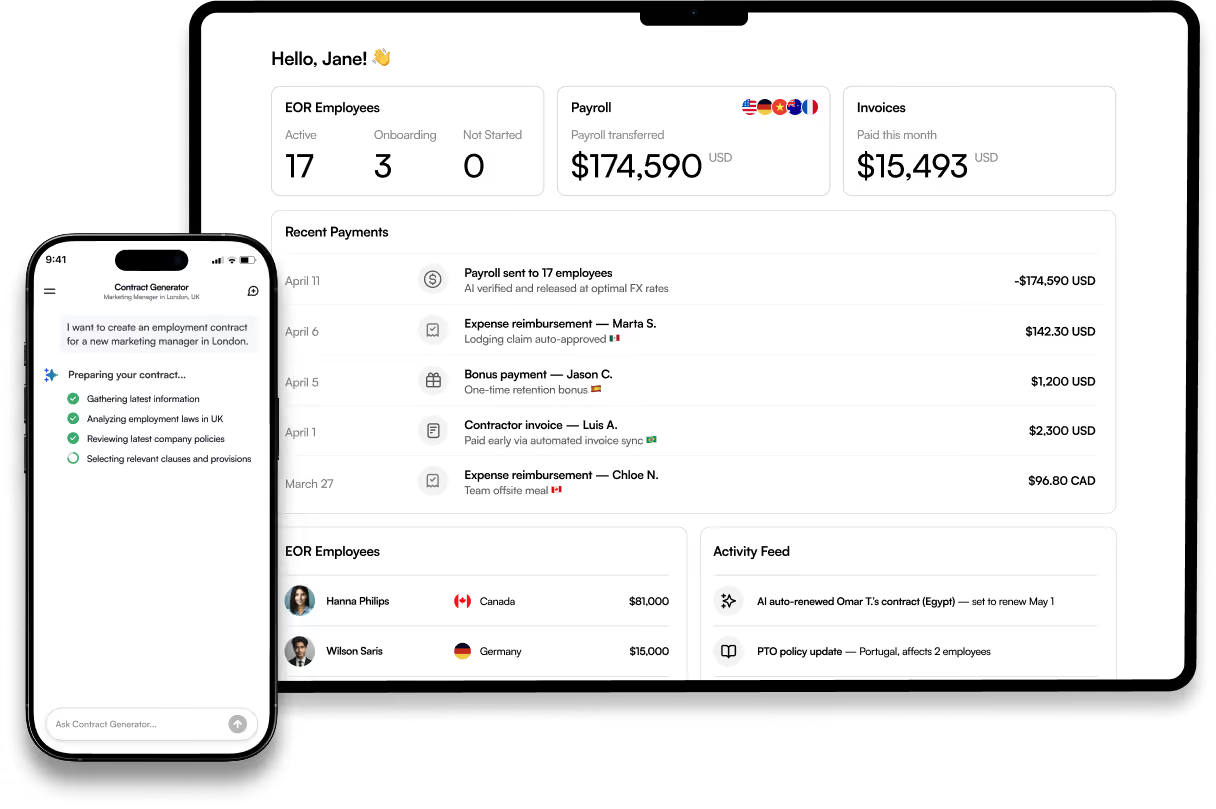
Borderless AI offers EOR support for employment contracts, onboarding, payroll and benefits administration, and lists Finland in its country coverage. Share the work location, duties, gross salary, planned hours, start date and work-authorization status. Ask for the proposed legal employer and applicable collective agreement, an itemized estimate of payroll and insurance costs, and the service fee. That gives your team the information to confirm the offer and the first payroll together. Borderless EOR services · Country coverage · Book a demo