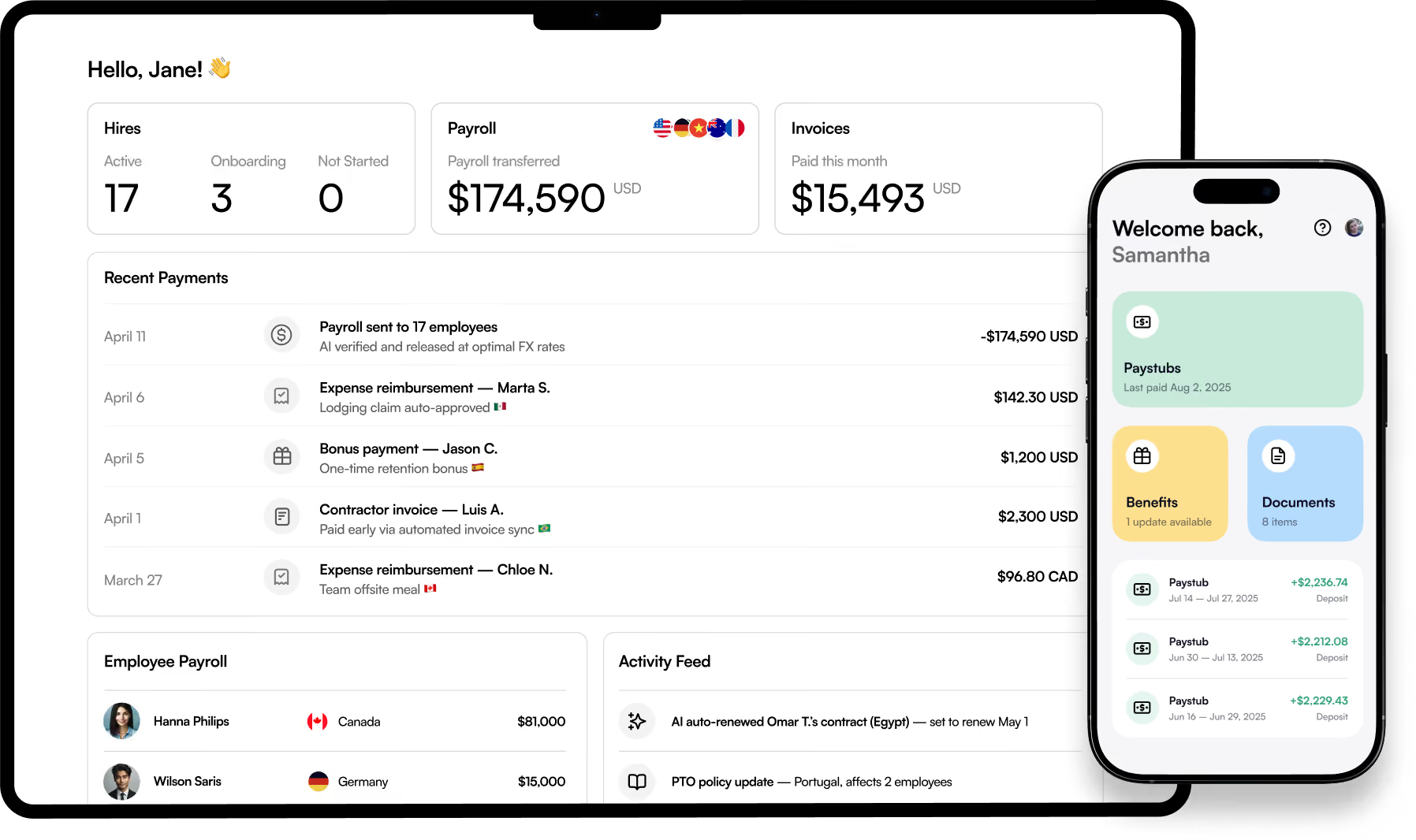

Employer of Record Guide in China
China's massive talent pool and dynamic economy offer incredible opportunities, but navigating its complex employment landscape requires expertise. This guide breaks down everything you need to know to hire compliantly and build your dream team in the world's second-largest economy.
Capital City
Currency
Languages
Population size
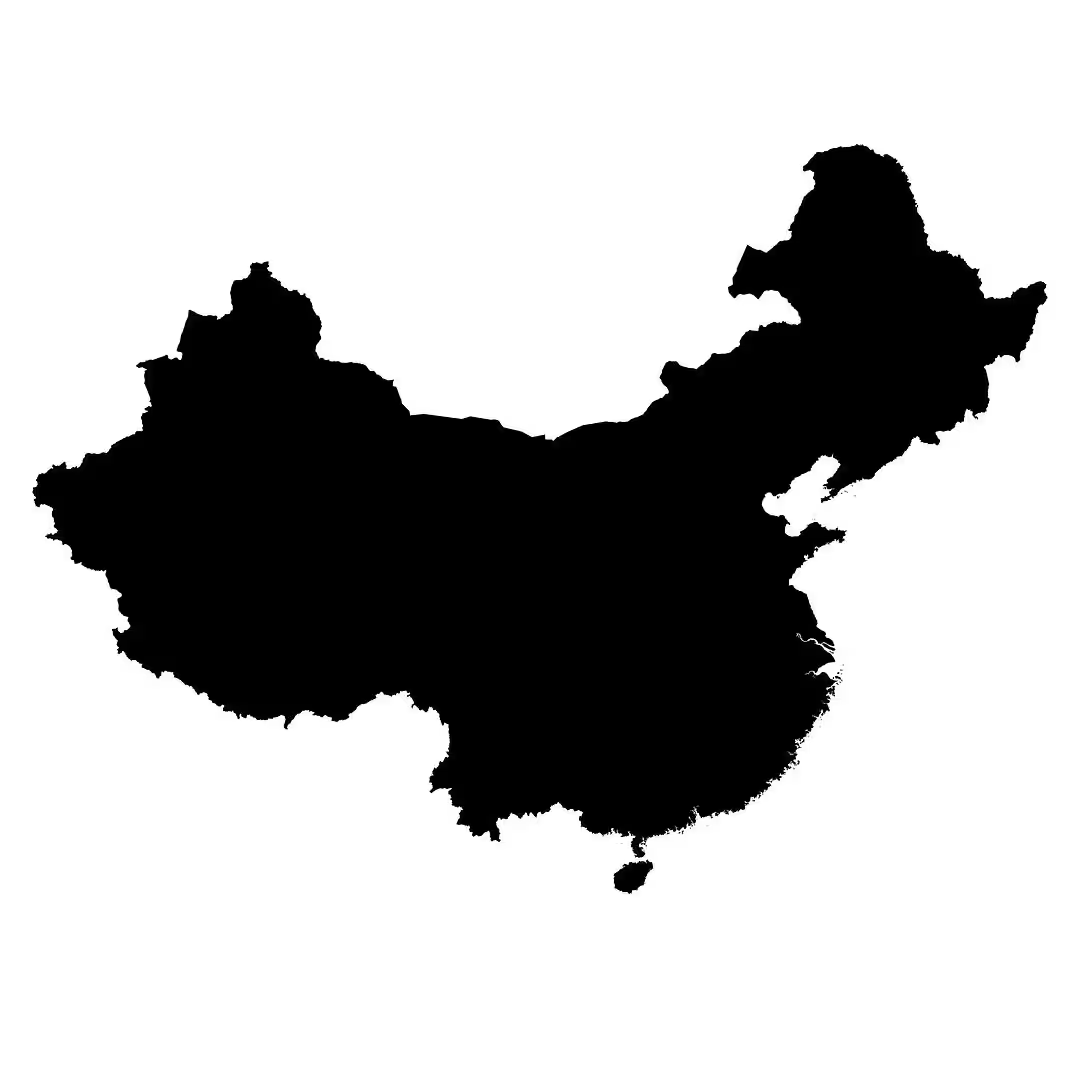
Key stats and facts
From AI engineers in Shenzhen to supply chain experts in Shanghai, China's diverse economic hubs are home to world-class talent across high-growth sectors. Understanding the market fundamentals—including regional variations, tax structures, and cultural nuances—is your first step toward successful expansion.
Major economic hubs
Skills in demand
Currency
Language
GDP per Capita
Standard Tax Rate
Your EOR guide in China
China's employment regulations are detailed and vary significantly by region, making compliance both critical and complex. Here's your practical roadmap through payroll requirements, leave policies, hiring procedures, and everything else you need to get it right from day one.
Minimum Wage
China operates a tiered minimum wage system with significant regional variations. Each province and major city sets its own rates, updated annually.
| Region | Monthly Minimum (CNY) | Hourly Minimum (CNY) | Effective Date |
|---|---|---|---|
| Shanghai | ¥2,690 | ¥24 | July 1, 2023 |
| Beijing | ¥2,420 | ¥26.4 | September 1, 2023 |
| Shenzhen | ¥2,360 | ¥22.2 | August 1, 2023 |
| Guangzhou | ¥2,300 | ¥22.2 | December 1, 2023 |
| Hangzhou | ¥2,280 | ¥22 | August 1, 2023 |
Note: Minimum wages are typically adjusted annually based on economic conditions and cost of living.
Payroll Cycle
- Monthly: Most common, typically paid by the 15th of the following month
- Bi-monthly: Some companies pay twice per month
- Legal requirement: Salaries must be paid at least once per month
Individual Income Tax
China uses a progressive tax system with rates ranging from 3% to 45% for residents.
| Annual Income (CNY) | Tax Rate |
|---|---|
| Up to ¥36,000 | 3% |
| ¥36,001 - ¥144,000 | 10% |
| ¥144,001 - ¥300,000 | 20% |
| ¥300,001 - ¥420,000 | 25% |
| ¥420,001 - ¥660,000 | 30% |
| ¥660,001 - ¥960,000 | 35% |
| Over ¥960,000 | 45% |
Standard Deduction: ¥60,000 per year (¥5,000 per month) for residents.
Tax Residency Criteria
Individuals are considered Chinese tax residents if they:
- Reside in China for 183 days or more in a calendar year, or
- Have a domicile in China (regardless of time spent)
Non-residents are taxed only on China-sourced income.
Employer Payroll Contributions
Employers must contribute to China's social insurance system, with rates varying by city.
| Contribution Type | Employer Rate | Employee Rate | Total |
|---|---|---|---|
| Pension Insurance | 16% | 8% | 24% |
| Medical Insurance | 9-11% | 2% | 11-13% |
| Unemployment Insurance | 0.5-1% | 0.5% | 1-1.5% |
| Work Injury Insurance | 0.2-1.9% | 0% | 0.2-1.9% |
| Maternity Insurance | 0.8-1% | 0% | 0.8-1% |
| Housing Provident Fund | 5-12% | 5-12% | 10-24% |
| Total Range | 31.5-42.9% | 15.5-22.5% | 47-65.4% |
Note: Rates vary significantly by city. Housing Provident Fund rates are set by local governments within the specified range.
Working Hours
China's Labour Law establishes strict working time regulations:
- Standard work week: 8 hours per day, 40 hours per week
- Maximum work week: 44 hours per week (including overtime)
- Rest days: Employees must have at least one day off per week
- Flexible arrangements: Some industries allow flexible scheduling within legal limits
Overtime Pay
Overtime compensation is mandatory and calculated as follows:
- Weekday overtime: 150% of regular hourly wage
- Weekend work: 200% of regular hourly wage
- Holiday work: 300% of regular hourly wage
- Monthly limit: Generally 36 hours of overtime per month
Bonus Payments
- 13th Month Bonus: Common practice, though not legally mandated
- Performance Bonuses: Subject to individual income tax
- Annual Bonus: Special tax calculation method available for annual bonuses
Full-Time vs. Part-Time
- Full-time: Standard employment relationship with full benefits
- Part-time: Maximum 4 hours per day, 24 hours per week
- Dispatch workers: Third-party employment arrangement with specific regulations
Vacation Leave
Annual leave entitlement increases with total work experience (not just tenure with current employer):
| Years of Work Experience | Annual Leave Days |
|---|---|
| 1-10 years | 5 days |
| 10-20 years | 10 days |
| 20+ years | 15 days |
- Accrual: Based on calendar year
- Carryover: Generally not permitted unless company policy allows
- Payout: Must be paid at 300% of daily wage if not taken
Sick Leave
- Medical leave: Up to 24 months depending on tenure and illness severity
- Sick pay: 60-100% of salary depending on tenure and local regulations
- Medical certificate: Required for extended sick leave
- Job protection: Position must be held during medical leave period
Maternity Leave
- Standard entitlement: 98 days minimum (14 days prenatal, 84 days postnatal)
- Provincial variations: Many provinces extend to 128-158 days
- Complications: Additional 15-30 days for difficult births
- Pay: 100% of salary through maternity insurance
- Job protection: Position guaranteed upon return
Paternity Leave
Paternity leave varies significantly by province:
| Province/City | Paternity Leave |
|---|---|
| Beijing | 15 days |
| Shanghai | 10 days |
| Guangdong | 15 days |
| Jiangsu | 15 days |
| Zhejiang | 15 days |
Bereavement Leave
- Immediate family: 1-3 days (spouse, parents, children)
- Extended family: 1 day (grandparents, siblings)
- Pay: Full salary during bereavement leave
- Documentation: Death certificate may be required
Other Statutory Leave
- Marriage leave: 3 days (up to 30 days in some provinces)
- Nursing leave: 1 hour per day during first year after childbirth
- Examination leave: Time off for continuing education exams
Summary
| Leave Type | Duration | Paid? | Funding |
|---|---|---|---|
| Annual Leave | 5-15 days/year | Yes | Employer |
| Sick Leave | Up to 24 months | 60-100% | Employer/Insurance |
| Maternity Leave | 98-158 days | Yes | Social Insurance |
| Paternity Leave | 7-30 days | Yes | Employer |
| Bereavement | 1-3 days | Yes | Employer |
| Marriage Leave | 3-30 days | Yes | Employer |
Termination Types
Termination by Employee:
- 30 days' written notice required
- No notice required during probation period
- Immediate termination allowed for serious employer violations
Termination by Employer:
- With cause: Immediate termination for serious misconduct
- Without cause: Requires economic compensation and proper procedures
- Redundancy: Special procedures and higher compensation required
Notice Period Requirements
| Termination Type | Notice Required |
|---|---|
| Employee resignation | 30 days |
| Employee resignation (probation) | 3 days |
| Employer termination (performance) | 30 days or pay in lieu |
| Employer termination (redundancy) | 30 days + consultation |
| Immediate dismissal (cause) | None |
Severance Pay
Economic Compensation Formula:
- 1 month's salary for each year of service
- Partial years calculated proportionally
- Maximum base salary: 3× local average wage
- Maximum compensation: 12 months for high earners
Special Circumstances:
- Illegal termination: 2× economic compensation
- Redundancy: Additional consultation and support required
- Fixed-term contracts: May require additional compensation
Probationary Periods
Probation length depends on contract duration:
| Contract Length | Maximum Probation |
|---|---|
| 3 months - 1 year | 1 month |
| 1-3 years | 2 months |
| 3+ years or indefinite | 6 months |
Final Pay Requirements
- Timeline: Must be paid with final salary
- Components: Base salary, overtime, unused annual leave, economic compensation
- Documentation: Termination certificate must be provided
Legal Protections
Employees cannot be terminated for:
- Pregnancy, maternity, or nursing
- Work-related injury or occupational disease
- Medical leave within legal limits
- Union activities or labour dispute participation
National Holidays
China observes several national holidays with mandatory time off:
| Holiday | Date | Days Off |
|---|---|---|
| New Year's Day | January 1 | 1 day |
| Spring Festival | Lunar New Year | 3 days |
| Tomb Sweeping Day | April 4-6 | 1 day |
| Labour Day | May 1 | 1 day |
| Dragon Boat Festival | Lunar calendar | 1 day |
| Mid-Autumn Festival | Lunar calendar | 1 day |
| National Day | October 1-3 | 3 days |
Note: The government typically extends holidays by moving weekend days, creating longer holiday periods.
Holiday Pay Rules
- Working on holidays: 300% of regular daily wage
- Eligibility: All employees entitled to holiday pay
- Substitute holidays: If required to work, must provide substitute rest day
Regional Variations
Some regions observe additional local holidays:
- Ethnic minority areas: May observe traditional festivals
- Special administrative regions: Different holiday calendars
- Local government: May designate additional rest days
Required Documentation
Employment Contract Requirements:
- Job description and responsibilities
- Salary and benefits structure
- Working hours and location
- Contract duration and probation period
- Termination clauses
Employee Documentation:
- Identity verification: National ID card or passport
- Work permit: Required for foreign employees
- Education certificates: Often required for professional roles
- Health certificate: Required for certain industries
- Social insurance registration: Must be completed within 30 days
Language Requirements
- Contract language: Must be in Chinese (bilingual contracts acceptable)
- Work language: Varies by company and role
- Translation: Foreign documents may require certified translation
Background Checks
- Criminal background: Permitted for relevant positions
- Education verification: Common practice
- Employment history: Reference checks allowed
- Credit checks: Limited to financial roles
- Consent required: Employee must agree to background checks
Data Protection & Privacy
China's data protection landscape includes:
- Personal Information Protection Law (PIPL): Comprehensive privacy regulation
- Cybersecurity Law: Data localisation requirements
- Data Security Law: Additional security obligations
- Cross-border transfers: Require approval for certain data types
IP Assignment & Confidentiality
- Work-related IP: Automatically belongs to employer
- Non-compete agreements: Limited to senior employees, maximum 2 years
- Confidentiality: Standard clauses enforceable
- Trade secrets: Strong legal protection available
Probation Period Setup
- Performance standards: Must be clearly defined
- Evaluation process: Regular feedback required
- Termination during probation: 3 days' notice required
- Benefits: Full benefits typically apply during probation
Onboarding Timeline
| Step | Timeline |
|---|---|
| Offer acceptance | Day 0 |
| Contract signing | Day 1-3 |
| Work permit application (foreigners) | Day 1-30 |
| Social insurance registration | Day 1-30 |
| Bank account setup | Day 3-7 |
| System access and training | Day 5-10 |
Worker Classification
China recognises several employment relationships:
Labour Relationship (Employee):
- Full employment protections apply
- Social insurance mandatory
- Subject to Labour Law and Labour Contract Law
Labour Service Relationship (Contractor):
- Limited protections
- No social insurance requirement
- Governed by Civil Code
Dispatch Labour:
- Employee of dispatch agency
- Works at client company
- Special regulations apply
Note: Misclassification can result in significant penalties and back payments.
Unionization & Collective Agreements
- Trade Union Law: All enterprises should establish trade union organisations
- Collective contracts: Negotiated between unions and employers
- Worker representation: Required for certain employment decisions
- Dispute resolution: Unions play role in labour dispute mediation
Cultural Norms & Workplace Expectations
Communication Style:
- Hierarchical respect important
- Face-saving considerations in feedback
- Group harmony valued over individual expression
Work-Life Balance:
- Long working hours common in some industries
- "996" culture (9am-9pm, 6 days) legally challenged
- Increasing focus on work-life balance
Professional Development:
- Continuous learning highly valued
- Training opportunities expected
- Career progression important for retention
Remote Work Considerations
Remote work regulations are evolving:
- Legal framework: Limited specific legislation
- Contract terms: Must specify work location and arrangements
- Equipment: Employer typically provides necessary tools
- Supervision: Employers must ensure compliance with working time limits
- Cross-border: Complex regulations for employees working from outside China
Anti-Discrimination Laws
China prohibits discrimination based on:
- Gender (with some exceptions)
- Ethnicity and nationality
- Religious beliefs
- Disability (reasonable accommodation required)
- Infectious disease carriers (HIV, hepatitis B)
Special Protections:
- Pregnancy and maternity
- Age discrimination (limited protection)
- Regional origin (hukou system considerations)
What Borderless AI Handles:
When you hire in China through Borderless AI, we manage:
- Employment contract drafting and compliance
- Social insurance registration and contributions
- Payroll processing and tax withholding
- Regulatory compliance monitoring
- Local HR support and employee relations
- Termination procedures and documentation
Built-in benefits packages for China
When the world is your competition, it pays to incentivize new hires and existing alike. Borderless AI benefits packages typically include:

Medical Insurance

Dental Insurance

Retirement Contribution

Life Insurance

Vision Insurance
Explore other countries






Unlock global hiring potential
Simplify your payroll and hiring processes today.