



Hiring in Taiwan is technically faster than it has ever been; however, securing an entity and keeping track of local rules and staying compliant can be costly and time-consuming. Using an Employer of Record service in Taiwan let you hire a local team without opening an entity.
The EOR acts as a partner, handling payroll, tax, work permits, and labour-law compliance for you. That matters here, because the rules changed in late 2025 and again in January 2026.
An employer of record (EOR) becomes the legal employer of your Thai staff on paper. You still run the day-to-day work. The EOR handles contracts, monthly payroll, social security, and filings so you stay compliant from day one.
This guide compares 6 providers that operate in Taiwan today.
Why use an Employer of Record in Taiwan?
Taiwan’s labor market stays tight and skilled. The Overseas Community Affairs Council, citing the Directorate-General of Budget, Accounting and Statistics (DGBAS), reported the 2025 unemployment rate at 3.35%, a 25-year low. That keeps competition for specialists intense.
Export-led growth still pulls multinationals in, and official GDP outlooks move through the year. In August 2025, DGBAS projected 4.45% real GDP growth for 2025. Later cuts ran higher as AI demand strengthened.
The talent story remains the real draw. The OECD’s December 2023 PISA 2022 Chinese Taipei note puts math Level 2+ at 85%, versus an OECD average of 69%.
That pipeline feeds chip design, IC manufacturing, electronics, and AI hardware around Hsinchu, National Tsing Hua University, and ITRI. You compete for specialists inside a dense supplier network, so speed to a compliant offer matters as much as base pay.
An EOR helps when you need to test a Taiwan pod before a months-long entity setup. It also helps when you need accurate Bureau of Labor Insurance filings, Labor Standards Act contracts, TWD payroll, or immigration support for foreign nationals.
Misclassification creates back taxes and messy exits. A real EOR puts employment on local rails while you still manage the work.
For broader cross-border people ops context, see Borderless AI’s guide to international HR management.
How we chose the 6 best EOR companies in Taiwan
We refreshed this list against live vendor status, public pricing, G2 ratings, and business-model claims as of September 2026.
Skuad left the independent roster after Payoneer’s acquisition. Horizons rebranded to Remote People in February 2026, per PR Newswire. Multiplier fills the cost-aware slot.
We scored each provider on active standalone EOR status, pricing clarity, coverage honesty, G2 depth, Taiwan hiring fit, and buyer fit.
We used each vendor’s public pricing page for this refresh. See the comparison chart for published PEPM figures and custom-quote notes.
If you are comparing large platforms, pair this Taiwan list with our Deel alternatives roundup.
Employer of Record services in Taiwan: comparison chart
The figures below are compiled from vendor public pricing pages and G2 product pages reviewed for this September 2026 refresh.
Use the table for triage, then read the narratives. Country counts without entity quality still surprise buyers in diligence.
G2 scores and PEPM figures are from each vendor’s G2 product page and public pricing page as of September 2026. Chart cells link those primary sources directly; open vendor sections for narrative detail.
Borderless AI
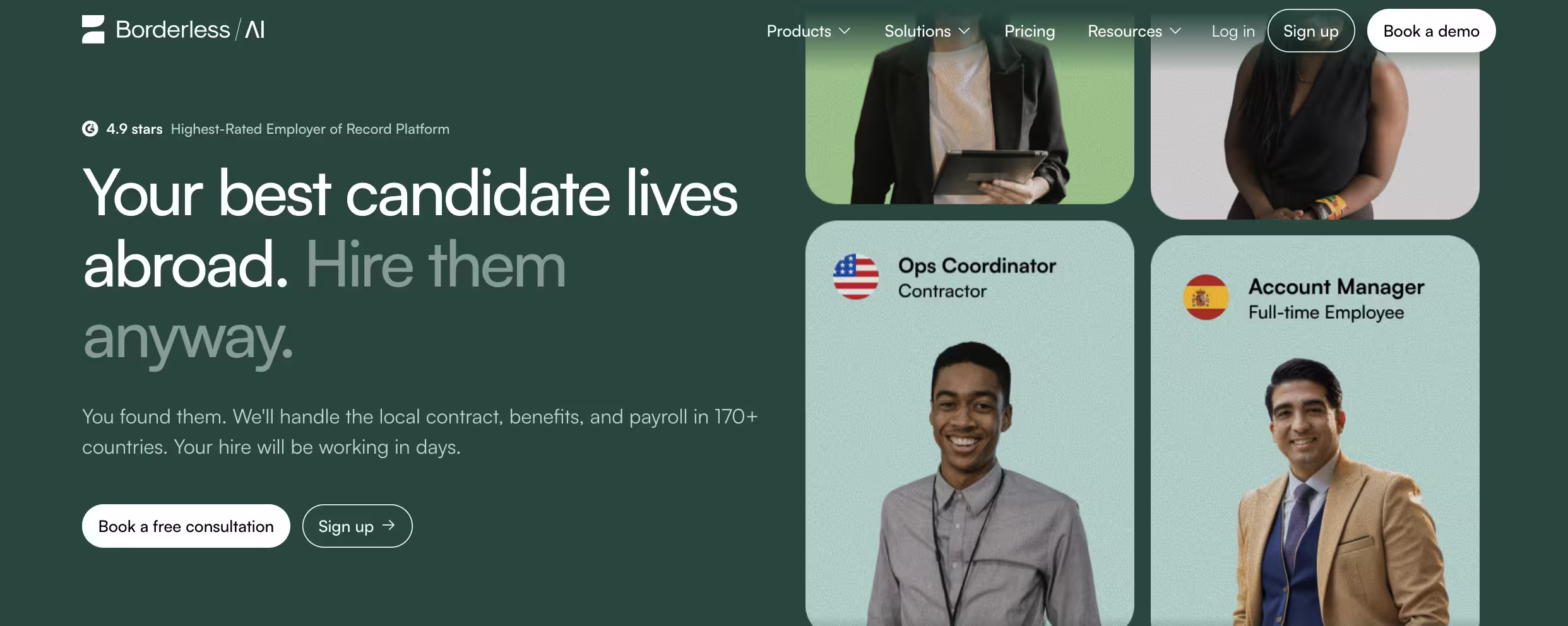
Why Use Borderless AI to hire in Taiwan?
Borderless AI is an easy-to-use Employer of Record and global payments platform built for teams that want fast hiring, straightforward payroll, and more control over international employment.
Companies can hire in Taiwan and 170+ other countries without setting up a local subsidiary. Borderless AI handles employment contracts, onboarding, payroll, and ongoing compliance, while your team continues to manage the employee day to day.
One of its main differentiators is its 100% owned-entity model. Instead of relying on third-party EOR partners in different countries, Borderless AI operates through its own local entities across its footprint.
Pricing is also public and straightforward. Borderless AI’s pricing page lists EOR services at $579 per employee per month.
Borderless AI’s how-to-hire guide states onboarding in 5–7 business days. It also states 100% owned entities, North American support, and a G2 rating of 4.9/5. The same guide cites 3–5 day payroll processing. The global EOR product page also markets 5-day payroll cycles and no deposits.
Tools such as HRGPT and contract generation cut admin load. HRIS links with Workday and ADP Workforce Now help once Taiwan is not your only market.
Who is it best for?
People Ops and TA leaders at startups and mid-market firms who want owned infrastructure, and AI-assisted HR workflows. They have usually outgrown spreadsheet-heavy global hiring.
Key Facts
Pros and Cons
Remote
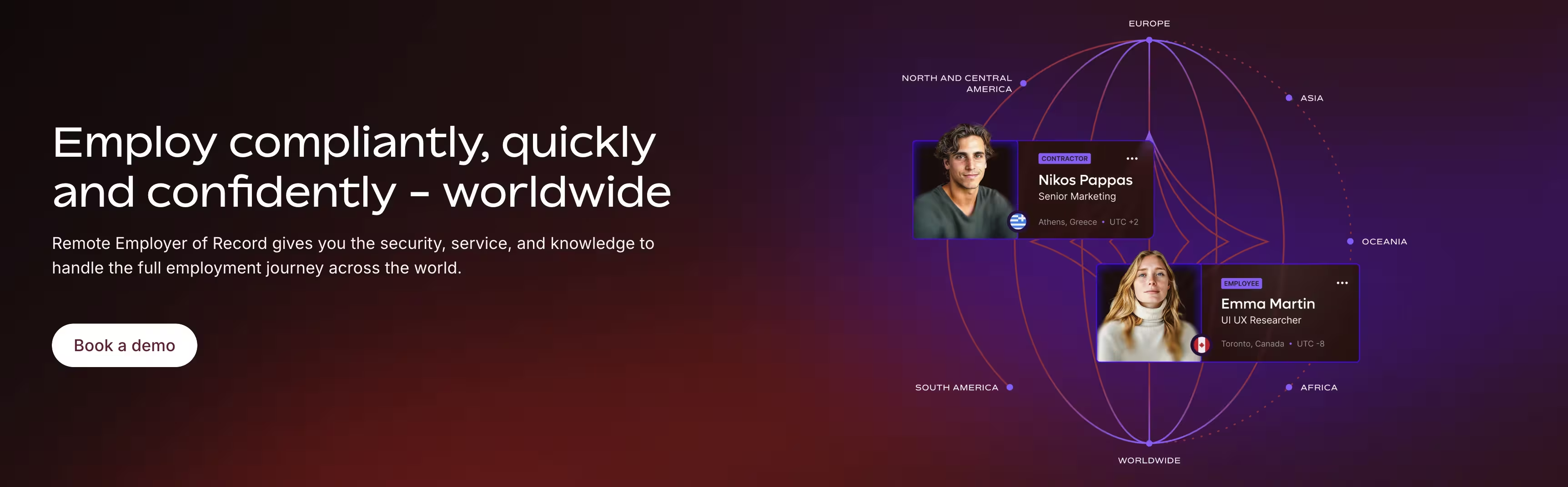
Why Use Remote to hire in Taiwan?
Remote is a full-stack global HR and EOR platform known for owned legal entities and a broad employee lifecycle product. Payroll, benefits, compliance admin, and equity tools sit in one system.
For Taiwan buyers, the draw is operational seriousness. Payroll can run in TWD, social contributions are first-class work, and the company markets owned infrastructure rather than pure reseller theater.
Remote’s pricing page lists public EOR at $699 per employee per month in USD. G2 shows about 4.5/5 across roughly 4,900+ reviews.
Be precise on coverage language. Product pages stress hire-without-your-entity capacity in 90+ countries on owned rails. Treat that as the EOR footprint to diligence, not an “everywhere equally” claim.
Remote fits companies that want a mature platform, care about equity beside salary, and will pay a premium for process depth. The tradeoff is price, product breadth, and learning curve. If you need one lean first hire, Remote can feel like more system than you need.
Key Facts
Pros and Cons
Multiplier
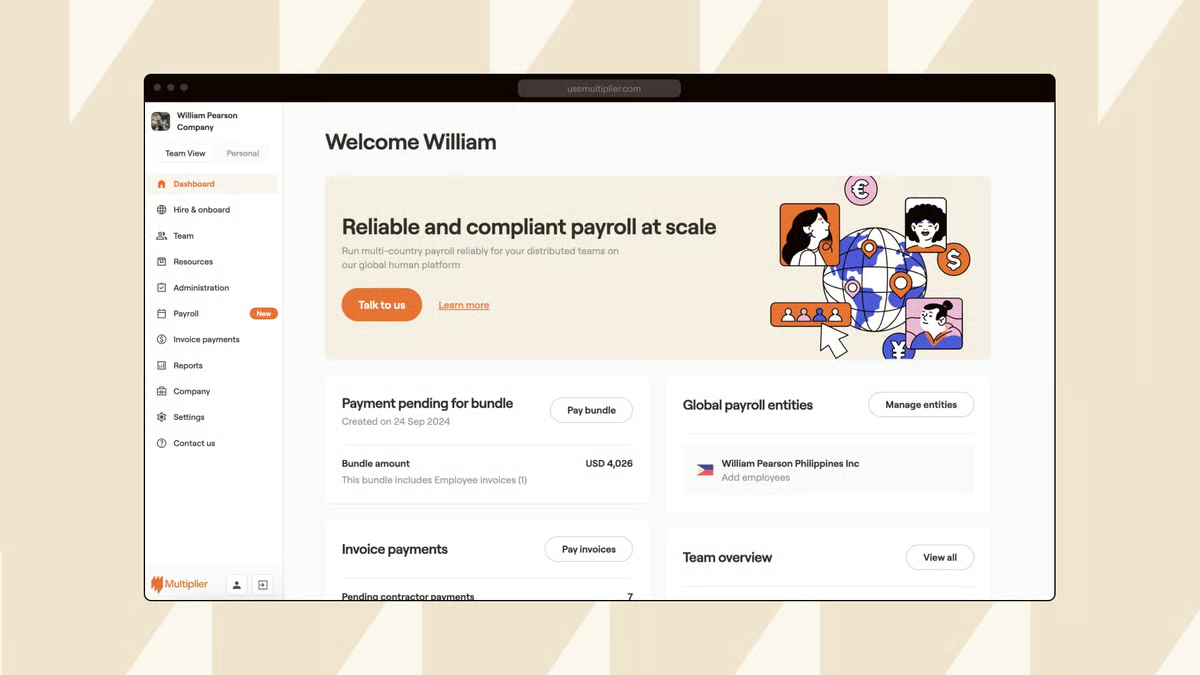
Why Use Multiplier to hire in Taiwan?
Multiplier fills a need for growth companies that want reach without the highest list prices.
Multiplier’s official pricing page lists Core EOR at $459 per person per month billed annually, with the monthly-billed tier shown on the same page. The page states Multiplier is rated 4.7/5 on G2 and markets expansion in 150+ countries on the site banner. Plan details still vary by country and tier, so treat final Taiwan rates as quote-confirmed against that public baseline.
A tip for working with Multiplier: Ask in writing who the Taiwan legal employer is. Confirm who files with BLI and tax authorities, and how partner escalations work.
Multiplier fits when budget sensitivity is real and you can invest diligence on entity maps. It fits less well if counsel mandates owned entity only with no exceptions.
Key Facts
Pros and Cons
Mercans
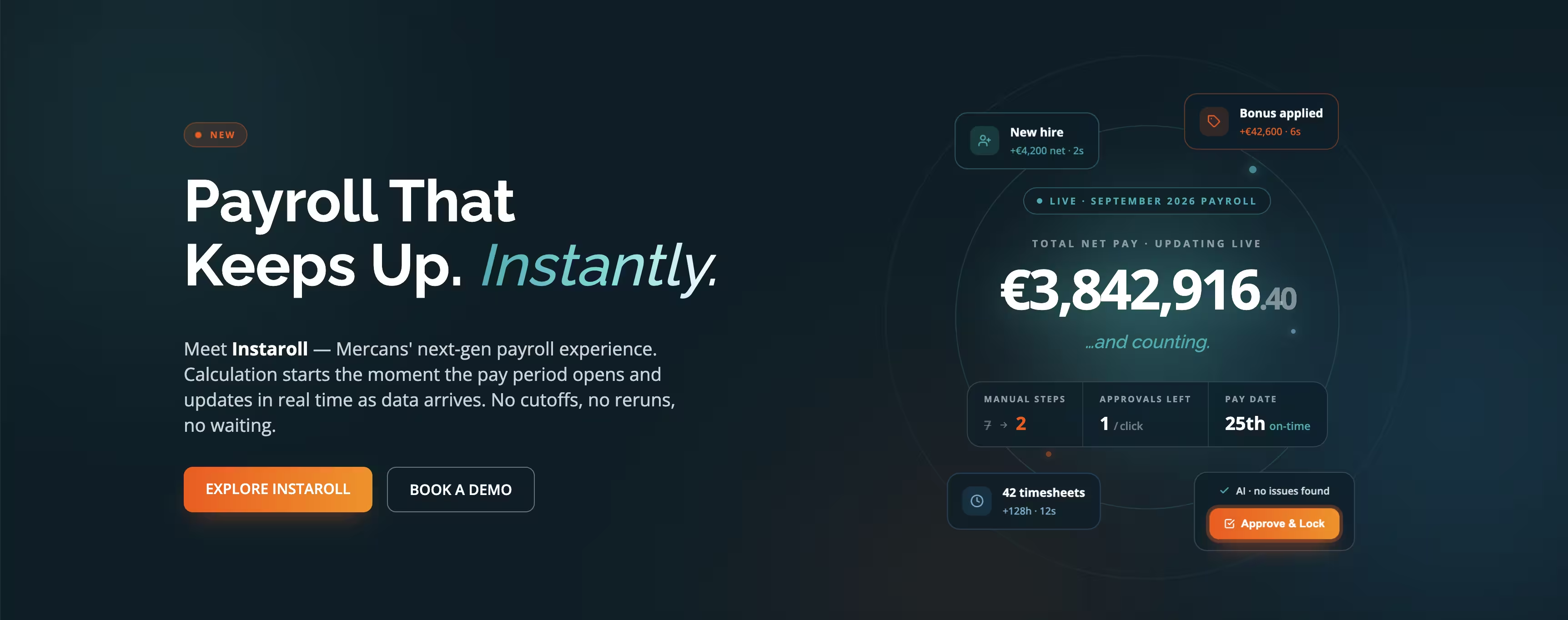
Why Use Mercans to hire in Taiwan?
Mercans takes a service-forward path across 160+ countries, pairing technology with in-country payroll and compliance teams. Where product-led EORs sell self-serve scale, Mercans sells specialist reassurance inside contribution filings and statutory reporting.
Mercans EOR materials emphasize labor-law compliance, tax and social-insurance handling, and benefits admin. Some packaging also discusses IP-conscious employment workflows for enterprise buyers. That angle can matter for semiconductor, hardware, and research employers—treat it as materials-based positioning, not a guaranteed IP outcome.
Pricing is custom on Mercans materials, so you will not get a clean blog-ready PEPM. G2 on Mercans PEO holds near 4.8/5 on a smaller review base.
Public materials often describe longer, service-led onboarding windows. Confirm the current Taiwan timeline in diligence rather than treating “weeks” as a hard published SLA.
Choose Mercans for white-glove payroll heritage and specialist-led delivery. Pause if you need transparent list pricing or a fully productized HRIS-style experience with few vendor meetings.
Key Facts
Pros and Cons
Deel
Why Use Deel to hire in Taiwan?
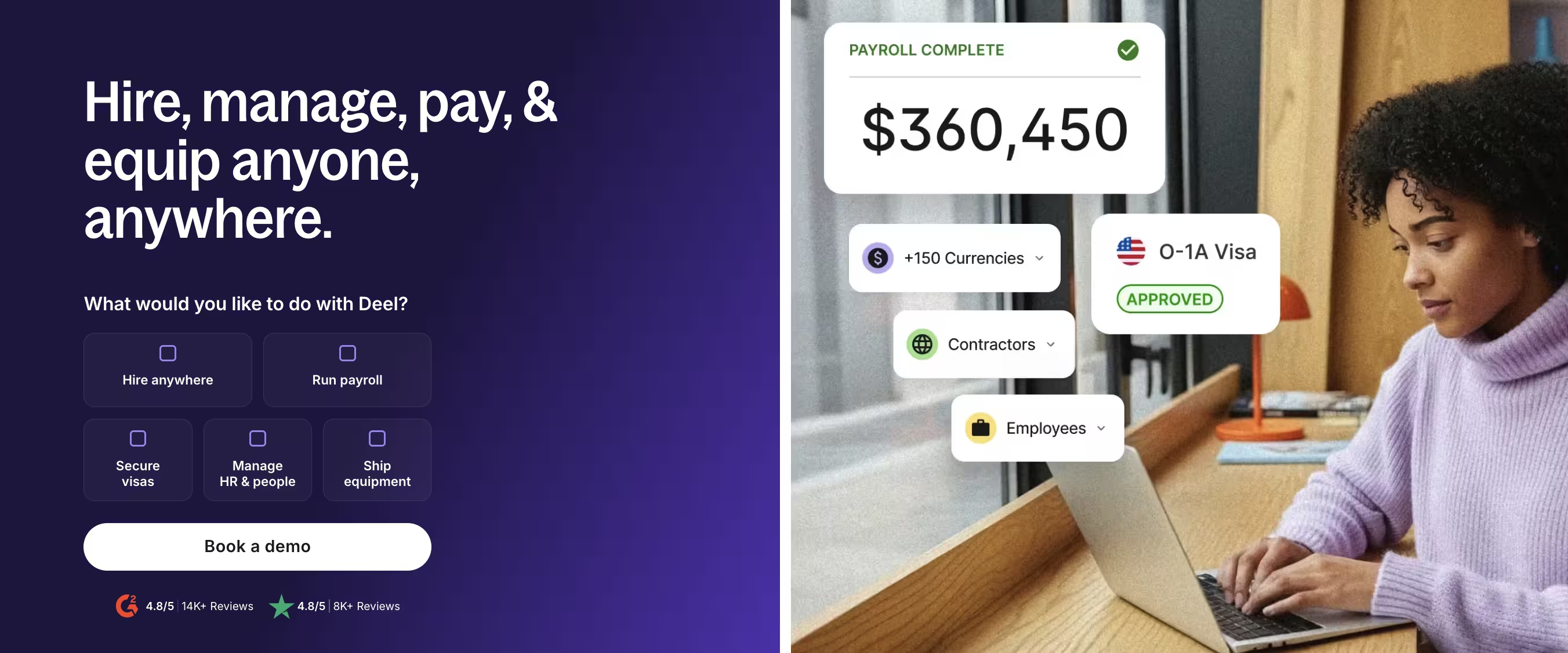
Deel is a global EOR and payroll platform many multi-country teams already know. Deel’s pricing page lists public EOR at $599 per employee per month and frames full legal employment in 130+ countries. G2 Deel Hire scores sit around 4.8/5 on large Hire and platform review sets checked for this refresh.
Deel’s public pricing language anchors the 130+ full legal employment footprint; broader commercial coverage is often discussed across 150+ in market materials. Taiwan buyers often evaluate Deel when they already use the platform elsewhere, need contractor conversion, or want visa-related support in one vendor relationship.
Product surface area is both advantage and cost. You get multi-country dashboards, contract templates, benefits workflows, and a deep integration ecosystem, plus enterprise complexity and more configuration work. Confirm how Taiwan employment is structured on your order form.
At $599 PEPM, Deel sits in the premium band with Remote’s higher $699 list. Total cost should include implementation time, not only the seat fee. Deel fits multi-country programs; it can be optional overhead if you want a narrower owned-entity EOR.
Key Facts
Pros and Cons
What should you look for in Employer of Record services in Taiwan?
Beyond logo slides, pressure-test five areas.
Legal employer and filings. Who is on the employment contract, and who remits labor insurance plus related employer amounts? Cover occupational accident insurance and labor pension too, and ask for a plain-language map to BLI processes.
Contract substance under the Labor Standards Act. Align hours, overtime, leave, holidays, and termination rules with the current LSA text, including the 31 July 2024 amendment cycle. Avoid a translated US template.
Money movement. Confirm TWD payroll, cut-off calendars, and salary pre-funding rules. Deposits change how much working capital a Taiwan pod consumes.
Entity model honesty. Owned entity, hybrid partner, or service bureau can all work. Failure comes from discovering the model only after a dispute.
Immigration reality. If you relocate foreign nationals, confirm permit support boundaries early so HR is not surprised mid-process.
For related global hiring guidance, see Borderless AI on global benefits strategy and global HR services.
Expert tips for hiring in Taiwan
Prioritize providers that explain Taiwan contributions with insured-salary caps and current schedule language. Use the latest BLI premium materials as the planning source, not a frozen percentage from an old blog post.
Separate time to signed contract from time to full payroll onboarding. Marketing that promises heroic same-week miracles still needs KYC and statutory setup.
For Borderless AI, plan on 5–7 business days to onboard and 3–5 day payroll processing with no pre-funding per the how-to-hire guide. The EOR product page also markets 5-day payroll cycles.
If you hire into hardware or chip-adjacent roles, put IP assignment, confidentiality, and invention language on the legal checklist. Do this especially when vendor materials emphasize IP-conscious packaging.
For multi-country roadmaps, score Taiwan as both a standalone market and a supply-chain node. Your EOR’s reporting and HRIS sync matter once headcount leaves single digits.
Read G2 for implementation comments, not only stars. Large review bases and high averages on smaller bases tell different stories.
How to choose the best EOR company for your Taiwan team
Step 1: Write the hiring brief. Define headcount, seniority, contractor conversions, visa needs, and IP sensitivity. State whether Taiwan is a test pod or a long-term hub.
Step 2: Set a non-negotiable on entity model. Owned-only versus hybrid-allowed changes the shortlist immediately.
Step 3: Build a total cost view. Include PEPM, deposits, implementation, and internal ops time. A $199 headline can lose to a $579 deposit-free process if pre-funding ties up cash.
Step 4: Run two demos with the same script. Ask identical Taiwan questions on BLI filings, leave accrual, probation, and offboarding. Compare answers, not slide design.
Step 5: Check references and G2 themes. Look for payroll accuracy, support responsiveness, and surprise fees.
Step 6: Pilot with an exit ramp. Define success for the first 90 days before you expand. Include on-time pay, clean contribution filings, and manager satisfaction.
When you are ready to switch providers, start with Borderless AI’s switch EOR path. Use the compare Borderless AI hub for side-by-side context.
Why choose Borderless AI as your EOR in Taiwan?
Borderless AI is for teams that want global hiring and global payments to feel simple. Our platform is intuitive and easy to use, utilizing AI where it counts, to help support compliance. Plus, we have a 24/7 support staff for all questions, big and small. We also own all of our entities, which makes the entire process smoother from end-to-end.
For Taiwan hiring, you get employment infrastructure across 170+ countries with 100% entity ownership. Public PEPM is $579 on the pricing page and the India EOR LP comparison table.
Borderless AI’s how-to-hire guide also states onboarding in 5–7 business days, 3–5 day payroll processing, and a G2 4.9/5.
Support is in-house and North America–based, and the 4.9/5 G2 score (158 reviews) matches the brand’s bet that speed and care can coexist. AI sits inside contracts, HR guidance, and admin lift, while Workday and ADP Workforce Now integrations help Taiwan hires share one employee data lifecycle.
Teams move to Borderless AI for owned entities, deposit-free payroll, and support quality—because the operating reality is better, not because the landing page is louder.
If you want Taiwan workflows in the product rather than in a PDF, book a live demo.
Choosing Employer of Record services in Taiwan in 2026
Employer of Record services in Taiwan are how many global companies access semiconductor-class talent without waiting on entity formation. The compliance load is real: Labor Standards Act rules, BLI-linked contributions, health-insurance employer shares, labor pension, and careful termination practice.
The growth backdrop remains AI- and export-linked, and official outlooks revise through the year. Rest your hiring case on skills and market access, not a single GDP headline.
Among the six providers above, match the tool to the job. Remote and Deel suit premium, platform-heavy programs. Multiplier and Remote People compete on entry price and flexibility, with extra diligence on delivery models.
Mercans serves expert-led payroll buyers. Borderless AI fits when owned entities, deposit-free payroll, AI-native operations, and high G2 satisfaction drive the decision.
Ready to hire in Taiwan without the subsidiary slog? Experience Borderless AI with a live demo.
.png)

.png)
.png)
.png)